


Povezani s knjigami
Projekt Povezani s knjigami vključuje trideset izjemnih literarnih del z različnih koncev Evrope, predvsem s področij manj govorjenih jezikov.
Izbrana dela – vse od otroških knjig, mladinskega leposlovja do romanov za odrasle – bodo izšla na slovenskem, poljskem, estonskem, severnomakedonskem, hrvaškem, grškem in italijanskem trgu. V projektu sodelujejo številni avtorji in avtorice, ki so priznani v domovini, ne pa nujno v drugih evropskih državah; njihove nagrajene slikanice in druge knjige za otroke ter drobni književni dragulji omenjenih trgov sicer ne bi dosegli.
Da bi izvedli projekt, ki želi povečati prepoznavnost avtorjev iz trinajstih evropskih držav, je moči združilo sedem založb iz različnih držav. Za boljšo promocijo avtorjev, ki ustvarjajo v manj govorjenih jezikih, kot so slovenščina, makedonščina, estonščina, bodo organizirani založniški sestanki tako v Evropi kot drugod po svetu, rezidence za neevropske založnike, poudarek pa bo na prodaji pravic ter udeležbi na mednarodnih knjižnih sejmih.
Da bi okrepili prevajalske stike, bo Društvo slovenskih književnih prevajalcev organiziralo tedenski seminar za tuje prevajalce, ki želijo prevajati iz slovenščine v druge jezike. Projekt nagovarja tudi širše občinstvo in med bralci širi zavest o raznolikosti evropske kulture. Tako je denimo cilj t. i. Bralnega vlaka razširiti krog bralcev ter pritegniti več spletnih sledilcev in naročnikov na knjižne škatle.
Avtorji in prevajalci, ki v projektu igrajo ključno vlogo, bodo širše občinstvo nagovorili na več dogodkih (14 avtorskih turnejah in 7 literarnih večerih). K uspešni uresničitvi projekta bo v 36 mesecih pripomoglo medsebojno povezovanje 7 založniških ekip, prevajalskega društva, 23 avtorjev, 22 ilustratorjev, 16 prevajalcev, 9 urednikov, 7 oblikovalcev, 25 članov projektnega tima, 10 distributerjev ter 11 urednikov. Skupno število sodelujočih strokovnjakov bo predvidoma 123.
Knjige iz projekta


- Prelistaj knjigo


- Prelistaj knjigo
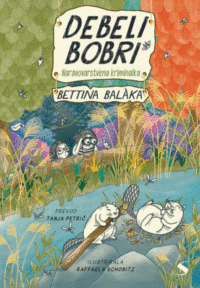


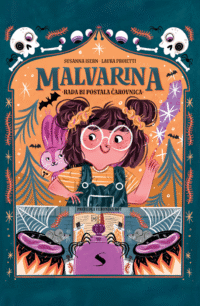
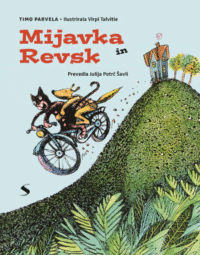

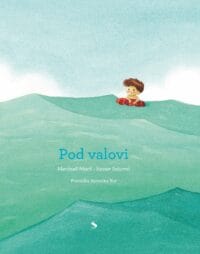




Read sample translations
The sample translations below present selected books included in the Creative Europe project Povezani s knjigami. Each card also includes a link to the original book or the partner’s presentation page.
The Big Secret
Piret Jaaks, illustrations by Marju Tammik, translation by Adam Cullen
The Contents of the Yellow Folder
Vlasta Golub, sample translation by Lina Krnic
Puss in Red Boots
Srebrenka Peregrin, illustrations by Valentina Supanz Marinić, sample translation by Lina Krnic
The Story of Pip the Fox
Jana Bauer, illustrations by Peter Škerl, translated by Evald Flisar
Gerdi Carries a Letter
Alenka Urh, illustrations by Petra Preželj
Olaf baffi lunghi (Olaf)
By Maria Vago – Illustrations by Federico Appel

No surprise, no loot The boy was sitting on the riverbank. He wore a shirt that was too big for him and a pair of patched-up trousers. He held a thin fishing rod with both hands. He held it tightly, and he must have caught a big fish because his face was red from the effort.
I felt my mouth start to water. I love freshwater fish: it has a more delicate flavor than that of the sea, and the flesh is more tender. A flash...a silver flash and splashes of water all around. The fish didn't want to be pulled out. With a strong pull, the boy made it fly onto the grassy bank. It was big! He stayed there for a while, contemplating it, while it struggled more and more slowly. Then the boy looked up and saw us. His mouth opened without making a sound. He even widened his eyes and ran away, abandoning his rod and the fish.
"There's your loot, Olaf," I thought. "The expedition is off to a good start."
I also thought that the boy could have spared himself the effort of running to the village to sound the alarm. It was too late. And too few, as usual, were the farmers capable of using scythes and pitchforks against us. After all, scythes and pitchforks are laughable weapons compared to our swords (and our axes). Weapons that are good for subduing the land, in fact, and not valiant Viking warriors. Ah, ah! Run, run! That's all you know how to do around here: run like rabbits and hide in the woods.
On the other hand, that's always what had happened: this was at least the tenth expedition that I had participated in. Not that I liked it very much, to be honest. I would have preferred to doze off near Sigur's forge, the blacksmith. I had tried to hide, but Leif had found me crouched behind a barrel, and he had thrown me unceremoniously onto the longship. He's convinced that I bring him luck...
 "But today the luck is mine," I thought. "Fish, here I come. Before Leif and the others are back from looting, you'll be in my belly. Word of Olaf Longbeard." As I savored the fish, I heard the shouts of our warriors as they went into battle.
It's a habit that I don't like: I have very sensitive ears, but it seems that the Vikings just can't do without them. First, they let out screams like growls or thunder, and then triumphal screams... But there were other screams that time. Not the usual terrified voices; rather, voices giving orders. What was happening?
I understood when I saw Leif and the others running back, first chased by some arrows and then by flesh-and-blood soldiers. Soldiers armed with bows and swords and dressed in iron chainmail.
 "These guys mean business," I thought. I gave up on the fish and ran to the longship. Just in time. Thorkel the giant, as strong as ten men put together, pushed the boat into the water and then had to take a few running steps to reach it and jump on board, because the others were already at the oars and bending their backs at a frantic pace.
"Let's go, let's go!" Leif shouted. An arrow hit him and lodged in his shoulder. "Quick! Faster!" A few minutes later, the longship was already in the middle of the river and speeding away, propelled towards the sea by strong arms and the current. Fortunately, our boats have two fronts; that is, the front and the back are the same thing; in short, they don't have to turn to change direction, which makes them agile and very maneuverable. A really handy thing, in case of a hasty escape. We were safe, but Leif's face was darker than a storm. His wounded shoulder burned, but above all, he burned with defeat. He hadn't anticipated that the village could be defended by a garrison of soldiers.
"They were waiting for us, that's clear," he said. "But who could have known about our attack?" Now that they didn't need to row like crazy, the warriors had enough breath to talk. "In the spring, we always attack some village around here, of course, they were expecting us!"
"But it had never happened before!" "They got clever, that's all."
"If we can no longer rely on surprise, from now on everything will be more difficult."
"We will have to say goodbye to the beautiful fat pigs waiting for us in pens, to the woolen blankets, to the golden books in the churches..."
"And even to the barrels of wine!" added Gunulf, his voice broken by a sob. Gunulf really liked wine: he could drink a whole barrel without ever stopping to take a breath.
Leif didn't say anything anymore. He sat in the middle of the longship, his back against the mast, and silently watched the arrow they had taken from his shoulder. My master looked incredulous and worried at the bloody tip. Then he looked longingly at the coast, now distant. When he finally spoke, his voice sounded calm and determined. "Who's coming with me?" he asked.
 Everyone's heads turned to look at him. Everyone's eyes asked, "where?"
"To the west," answered Leif, "where the sea ends and another land begins."
At that moment, the longship entered a bank of fog so thick that you couldn't see a whisker's length ahead. Raghner maneuvered the helm confidently. He knew those waters well, and there was no risk of him losing his way. But Leif wanted to face an unknown sea... Leif waited in vain for responses. The fog concealed their faces, but they were certainly faces of surprise, concern, or both.
"I call for an assembly," Leif said after a while. "As soon as we disembark. Immediately!"
"We don't have anything to unload anyway," Kol said.
"Nor any loot to divide," added Thorkel.
"Will there be anything to drink down there?" Gunulf asked worriedly. For the first time, he returned from a raid empty-handed and with a dry throat.
The assembly was long and very boring. The men talked and talked and talked some more. The women distributed large mugs of beer and rye bread with salted dried fish on top. And then more mugs of beer, because salted dried fish makes you thirsty. The children had been sleeping for a while under the blankets and furs.
Better Fur: Blankets are scratchy, fur is soft; even though both fur and blankets have a slight odor... But that's beside the point.
So, the children slept on their beds and I dozed off in a corner of Leif's bed, on a fur, when a loud noise made me jump and my hair stand on end.
About ten men shouted together, "Yes!" They still had their arms raised; even Gunulf, who was not standing next to Leif like the others, but was sitting with his legs wide against one of the wooden pillars that supported the roof. Between his legs was a bottle. His hand fell down and so did his head; Gunulf began to snore, with the bottle as his pillow. Yes, but what? The men started talking again. I wasn't interested in what they were saying.
Ruggiti (Roars)
By Daniela Carucci – Illustrations by Giulia Torelli

1. NOT HERE
It happens in an instant and always catches me off guard. A high-pitched, shrill sound makes me jump out of my chair. My eyes fly open, my heart races. It’s over in a flash, and I’m hurtling down the stairs, chased by the sound of the bell. I run, I run. Even though a voice shouts at me, as if in slow motion: ‘Don’t-run-down-the-stairs!’
But how can I stop? Today is Tuesday. I’m leaving school on my own and before I get home, I can stop to peek from behind the bushes at Mario’s workshop, because maybe he’ll let me in.I don’t stop running even when I trip, not even when I’m hungry, not even when my diary falls from my hands, not even if they call me to play.
I run to get to the hedge first, the one that separates the road from the workshop and which, if I look closely through its gaps, lets me see what’s inside: a yard of dark earth and wrecks of old cars. Parts scattered everywhere: a door, an engine, wheels, mirrors, half-finished mopeds.
Inside there’s also Mario, who doesn’t want me to spy on him, to stay there in the middle of the tall grass, and who, when he sees me, first tries to send me away, and then comes to fetch me.
“Come on, come in!” he says to me again this time.
“You’re a stubborn one, aren’t you?! We’re working here!”
But in the meantime, Mario opens the back gate for me. “And besides, Leo’s sad today; he’s not talking to anyone, not even me.”

I usually throw my arms round Mario’s neck when he lets me in, but not today. Because if Leo’s sad, I get sad straight away too, and I don’t throw my arms round him anymore.
I cross the courtyard quickly and, as I do so, I put my hands in my pockets because I’ve brought Leo: a salami sandwich, today’s snack, a frankfurter left over from yesterday’s dinner and two tins of Manzotin I’ve nicked from the shop round the corner, since there are loads of tins like that there.
When I reach Leo, I’m holding everything in my hands, and I call out: ‘Leo?’
Perhaps he’s asleep. ‘Leo, it’s me.’
Nothing. I look at his head, so big and full of fur, I look at his paws, worn down by time, and his tail, which moves, but only slightly.
‘Leo is all yours. He’s a good boy.’

Then I hear Mario’s voice behind me.
‘Leave him be today, that’s just how he is. He’s not moving, he’s not saying a word. Maybe he’s realised they’re taking him away.’
‘What? Who’s taking him away?’ I say seriously, looking Mario straight in the face.
‘The Security men: the Blues,’ he replies, looking down and speaking in a whisper.
“But why?” I insist.
“They say he can’t stay here: he’s dangerous, if he escapes he might maul everyone, devour the neighbourhood’s inhabitants one by one. A lion, even if old and tired, can’t stay in a mechanic’s workshop. We have to say goodbye to him.”
“Do I have to say goodbye to him?” I say quietly.
I hear no reply.
‘Is this goodbye?’ I ask louder.
But Mario is already further on, packing a bag with food for Leo, just as they do at my house when I’m off on a trip. But Leo isn’t going to a place where you look at a few paintings, churches and palaces until you’ve had enough and can think of nothing but when you’ll be able to play. No, they want to take Leo away, and no one knows where.
Shortly afterwards I hear a siren wailing, or rather many of them, and they’re getting closer. They’ve arrived.

Wheels skid to a sudden halt, scraping the tarmac.
Doors swing open and slam shut with a bang. Footsteps are quick and, now, I can see them.
There are at least ten of them, wearing blue stretchy suits, they have batons, shields and rifles with fake and real bullets. They enter the square without asking permission and stand in front of Leo’s den with their rifles raised.

No, it can’t be, they’ve arrived too soon, I’m not ready, it’s not time yet, and so, not knowing what to do, I try to stop them advancing and walk towards them with my arms outstretched, shouting:
‘Get out of here! Go away!’

‘Leo’s staying with us! He’s not dangerous! He’s the kindest, most peaceful lion in the world!’
They, however, are getting closer and closer and don’t look peaceful at all. There’s no time left. I grab a piece of rusty mudguard and stand in front of Leo’s den, whilst Victor, Mario’s dahshund, stands close by me and growls, baring his teeth. Meanwhile, the police take up their positions: rifles raised, fingers on the trigger, and all together they aim at Leo’s head or his heart, perhaps. It is at that moment that I scream as loud as I can: ‘I will never, ever say goodbye to him!’
Leo then raises his head and sits up. Now he is with us; I can see him out of the corner of my eye in all his beauty, and I remember the first time I met him, some time ago.


2. AT MARIO’S
It was because of the Alfa Romeo, the pea-green car with the long-pile fur-covered seats that’s been in our family for ages, at least since I was born.
Lately it’s been breaking down a lot, leaving us stranded, especially on Sundays. Once it broke down just before we reached the picnic spot with the boot still full of lasagne, bananas and cream buns. Another time, however, we were coming back from the seaside and the car started leaking water from all over; perhaps it had taken a dip too and we hadn’t noticed. In any case, there was nothing to be done; it wouldn’t start again. And so that afternoon we went home by bus with our buckets full of stones, twigs and other things brought back from the sea: even a really big crab that suddenly made itself at home in a lady’s arms who then started screaming.
The driver stopped the bus, caught the crab and asked us: ‘Do you have a ticket for this one?’
No, we didn’t, so he made us get off at some random stop.
Then one day, the car broke down right at the start of the trip, at stop number one, the newsagent’s. ‘You’ve got to know how the world works. At least on public holidays!’ said my dad that time, with the smile of someone who knows it all, just before the final defeat.
Needless to say, he wants to change it, the car. Every other day he shows us the photo cut out of a magazine of the new one: grey, long, low and sleek. ‘With this one you can go anywhere, even to the mountains!’ says Dad enthusiastically every time he pulls out that crumpled piece of paper he keeps in his wallet. But Mum, my brother and I don’t like it at all.
‘It looks like a metal shark,’ I say.
‘It’s not elegant,’ says Mum.
‘It doesn’t have a fur coat,’ my brother adds.
And so, we often go to see Mario the mechanic. Dad calls him “my friend Mario”, because they did their military service together somewhere in the mist. Or perhaps they met at the pub round the corner, or at a demonstration in the square, I don’t know.
Every time Dad and Mario meet, they reminisce about when they were young. And they laugh, and pat each other on the back. After a while, though, they get serious and Mario walks round the car, and starts asking questions, just like a doctor.
‘When did it stop?’, he says, stroking his chin and peering into the open bonnet.
‘Going uphill or downhill? Did you hear any strange noises? Did you drive on roads that were too rough? Has it taken knocks, blows, setbacks?’
Dad usually gets stuck in with the repairs too. The two of them pass each other spanners, pliers, rags smeared with black grease, plastic bottles dripping with oil, chains...
And they get under and over that battered car, even though my dad doesn’t know the first thing about engines.
Sometimes I just hear voices and I can’t see them anymore, or at least not all of them. A foot pokes out from behind a wheel, a head from the boot, a hand appears from the seat. And so, a few hours always pass before we leave.
Whenever I can, I go to Mario’s too, because I like that place: there are loads of abandoned cars, all broken down. I climb into one, then another, get behind the wheel and drive off. Sometimes, before setting off, I open the glove boxes and look under the seats, to see if there’s anything I can take home for my collection of lost items.
Once I found a box full of buttons and, so, I changed the eyes on some of my soft toys, the ones I’d had the longest. I put red eyes on a toad and it looked happy. I gave a mouse golden eyes and then called it Bijou, but I didn’t tell it. I stuck pink eyes on a snake, and it didn’t scare me anymore.
Another time, between the seats of a half-wrecked yellow car, I found a comb: long, narrow and black. I liked it straight away and tried to slick my hair back, even though I didn’t have any gel.
I wanted to try being a taxi driver, one of those in a vest, a man of few words, but who knows all the roads: just ask and he’ll take you there. Then, though, after combing my hair for a while, I realised the comb was old, it had lost too many teeth, and my hair was exactly the same as it had been before.
On closer inspection, rather than a comb, it looked like a set of dentures with missing teeth, lost by someone who was very absent-minded. I kept it anyway, though, and when I got home that day, I stuck it to the wall of my bedroom with glue, and drew a monster.
When I can’t find a single thing in those wrecks, I explore every corner of the yard, gather the bits I need and start building. One day I made a whole spaceship, another day the fastest motorbike of them all, and that time, together with Victor, we travelled far and wide – we went to Africa, Chile, and I think even Peru.
Except that after ten minutes he started barking; there was no way to get him to stop and the trip ended there. That’s Victor for you, a bit jumpy; every now and then he growls or barks, and you never know why. Mario says he’s got it in for ghosts, but I don’t believe in ghosts, so it must be that Victor’s just a bit mad. And I like him that way.
After playing in the square for a few hours, I hear the engine roaring; that means our old banger’s fixed again, and we can go home.
***
A few months ago, we were stranded again. ‘This is the last time,’ my dad announces, standing stiffly in the kitchen.
‘Let’s get it fixed first,’ my mum insists, pushing him towards the front door.
I’ve already got my shoes on and my jacket zipped right up to the top.
This time Mario has to come and pick us up right outside the front door, because the car shows no signs of life; it won’t budge an inch. We wait a while, amid Dad’s huffs and grumbles — he’s thoroughly annoyed at having to waste more time on ‘that heap of rust’ — until we see Mario and struggle to recognise him: he isn’t wearing his usual red tracksuit or even his woollen cap. He looks smart, wearing a jacket and grey trousers with thin stripes, and his hair is all slicked back.
Mario stops in front of the broken-down car and apologises for being late, saying he had an appointment and rushed over as soon as he could.
After loading the car, taking care not to get dirty, he tells us: ‘The workshop is closed today. But you aren’t customers like the others and I’d like to show you something.’ Then he climbs back into his van, which looks like a tango singer, and adds under his breath, lost in thought: ‘I’ve lost my mind.’
And without saying another word, he gets behind the wheel, and we sit beside him.
I’m Fine, Thanks
Jana Maasik

Excerpt translated by Adam Cullen

[pp 7–28]

First. Friday, May 16th
Ice Cube is rapping in the background about today being a good day. It is pretty good. I speed up on the skateboard, kick a few more times, lift the front wheel, jump, and land on a platform about thirty centimetres higher with the board only halfway on the surface. A frontside 5050 grind. I slide a couple metres, push off, land, and brake. Erik solemnly nods and then grins at his own patronising attitude. I wish I could come all alone to the old weigh station with its plastered walls and an asbestos roof, just two hundred metres from the river and our shack, but the guys also like the spot (understandably) and have been hanging out here for years. Same old, same old. Cars rarely drive by and although the pavement isn’t in the best shape, it’s compensated by a lack of any adults poking into our business and the side of the building itself (about ten metres wide and five metres high), which Max just started decorating with his artwork a second time. He and Erik covered up last year’s original attempt with grey paint a few days ago.
	“Check this out!” Erik shouts and kicks his way uphill along the same route I just followed. You’ve got to work up good momentum to make it, and he has. An impeccably smooth jump, a slightly rough landing on the concrete, a grind, and then back onto the pavement.
	“Wow!”
	Erik grins happily.
	We exchange a high-five and shuffle back to the others. Karl, Ralf, and Robby are standing with wide stances, their arms crossed over their chests, watching Max’s every move.
	“Somebody come over here and hold this, would you?” Max orders, shaking a can of spray paint agitatedly.
	Being the closest, I go over and take the stencil. It depicts a life-sized skater flying over a ramp. The ramp itself is already finished on the wall and looks just like a black-and-white photograph. It reminds me of LA artist Jonas Never’s (Max’s favourite) “A Touch of Venice” or maybe “California Sun”. Max is a huge Never fan. He likes other street artists, too, but Never’s something of a guru to him. The graffiti ramp on the wall is even covered in graffiti of its own: graffiti on graffiti. A little duller than it would be in real life, but the image looks brilliant. Crazy detailed. And all with just three layers of grey, black, and white.
	Max backs three steps down the slope to the others, cocks his head, squints, and starts giving directions: “Step a little to the left and raise it higher.”
	“I can’t reach any higher.”
	“Fuck, we’re going to need some kind of scaffolding. I can’t work like this. This three-legged stool is no bueno.”
	I stay standing on the stool, extending my arms and holding the stencil against the wall.
	“I dunno. Maybe I should add more shades. A couple light greys and dark greys… for shadow effect,” Max ponders.
	“You mean to make it, like, more three-dimensional or something?” Robby asks.
	“Nah… more realistic,” Max corrects him. “I’ve got to have a little think. Can you tell it shows evening and the ramp is only illuminated by a streetlight?”
	“Like it’s kind of dark or something? Sure, I think so. The wall not being white helps a little, I guess,” Erik comments.
“Could’ve been even darker grey,” Max murmurs, wrinkling his nose.
“Don’t sweat it,” Ralf pipes up. “Looks good this way, too.”
	“You keep your mouth shut! I’ll sweat when I wanna sweat, okay?”
	Ralf lifts his hands in defence. “Hey, chill, mate.”
	“Dry your eyes, mate, I know it’s hard to take but his mind has been made up…” Karl sings under his breath, grinning.
	“Hey, and you shut your mouth, too!” Max snaps.
	They all stand still and silent for a dozen seconds or so while Max comes to a decision.
	“I’ve got to make more preparations. I can’t finish it today,” he announces.
	We drop all the bottles of spray paint into Max’s backpack while he rolls up the stencil with extreme care. “Stencilling isn’t just some bullshit spray-a-few-blotches-on-a-wall. You’ve got to do your homework, too,” he explains, even though we’ve all grasped that ages ago.
	“Should we go to the Bowl?” Erik asks.
	I can’t decide what to do myself, so I just stare at the ground and roll my skateboard back and forth under one foot.
	“Or actually, let’s stop by our place first. I wanna eat something,” Erik says after a moment’s thought, then turns and shouts at Max, who’s already slung his backpack over his shoulder and pushed off down the weigh-station slope. “Max! Should I talk to my dad about that scaffolding?!”
Max turns his skateboard to the side to brake. “I dunno, maybe. My dad can’t be bothered to organise stuff like that.”
“Alright, I will!” Erik promises and looks over at me.
“I’m not coming right now.”
He gives me a look like I should rethink my answer.
“Maybe later.”
Shrugging, he waves goodbye and zooms across the bridge with the others. Karl is in the rear wearing a shirt with worn lettering on the back that reads “I  sk8”. Then, they disappear from sight. There’s a little over a kilometre to cross to reach town, which is nothing but a couple old Cold-War-era apartment blocks, several fields packed with new housing developments, a schoolhouse, a football pitch, a library, a café, a skate park, a petrol station, a so-called “shopping centre”, and a few other shops. The short commute to the capital and all kinds of other developments are attracting more and more people to the area. Not to this side of the river, though. This is where I live. And this is where the old, abandoned weigh station is. Further on are run-down barns and fields. The river is like a line drawn between the better-off folk and… Never mind.
My mobile is at nine percent battery.
It’s six-thirty.
Next to the weigh station, I find a weathered board that’s mottled grey and splintery. Shiny blotches of oil dot its surface. I pick it up and watch the woodlice and beetles scatter anxiously across the bumpy pavement. Flipping the board back over, I sit on it. The wall is warm from the sun, but the ground is still cold.
A slightly crooked sign at the opposite end of the sea of dandelions marks the town limits. Golden fields of grain undulate beyond it in summer, but right now, it’s still green. A huge island of stones towers in the middle of the nearest field. Alfred said it was made back when people were sent out to collect rocks and tractors scooped them together into that pile and others like it. The soil here is pretty stony in places, though not in the river valley.
It must have been three or four years ago when the guys and I built a fort out of broken-down pallets and sticks on the nearest stone island. We went to that ramshackle hut every day, surrounded by scraggly bushes and raspberry vines, until I was bit by an adder. I didn’t want to go back again.
The guys, and I mean all of them… I don’t know what I’d do without them. It’s hard to explain what I mean, exactly. Meaning I’d have to talk about almost all my days and all the things we’ve done together ever since I was nine. It’d be an insanely long story made up of minute details regarding what we’ve filled the days with. I know it sounds kind of dumb, but sometimes I think about them in connection with the moment I was born—the moment I chose to survive even though I was extremely premature and blue. I looked like a starved frog. Not that frogs are always blue. We’ve got this book that my old man used as a trivet. They gave it to my mum in the delivery ward and tucked between the pages is a photo of me when I was three days old. The only resemblance I still have are my eyes. Maybe it’s logical, I guess—a starved blue frog like that would be hard to love.
And still is.
My birth has nothing to do with the guys, of course, but the way I’ve thought of it is that back then, I was shown life’s contract in super tiny script. A page with two columns, good and bad. The guys, Luna, Merili, and Alfred were in the “good” column. Stumpy and my friends’ parents—especially Erik’s dad—too. There were other things in the “good” column like the skate park, adrenaline, Alfred’s garden, plants, school, school lunches. And a lot of other things, actually. Including people. The “bad” column was nearly empty, deceptively so, and maybe that’s why I got duped.
I didn’t read the fine print.
Ha. There was no actual “life contract”, of course. And I obviously wasn’t given a choice. No one is. You’re born wherever you’re born. Some people are luckier, others less so. But you can still imagine that I signed that contract and made my choice because the good outweighed the bad.
We moved here the summer before I went into first year. Mom still lived with us at first, though she didn’t stay long. “There’s nothing to do in this backwater. And I certainly don’t make enough to waste it all on the petrol it takes to commute back and forth all the way out here.” That was more or less what she said. All plain and simple. Petrol was pricey back then and it still is today. I still had my da here, of course.
I think it’s clear now why I see Mum so rarely.
I truly and honestly don’t feel like dwelling on it, but sometimes I do, anyway, and I’m always overwhelmed by the urge to do something dangerous.
Just as I get up and am about to ride to the Bowl, I hear girls’ laughter that shatters the relative silence of the windless evening that’s settled over the river valley.
“Hoodies, right, and baggy streetwear,” Merili says, obviously mimicking someone, and that makes the girls laugh even more raucously.
Now, they’re right next to the weigh station. I should come around the corner and announce my presence, but I wait.
“Huh!” Luna huffs disappointedly when the rumble of their skateboard wheels has faded away.
“They’ve already come and gone. Without us. Again.”
“Really, it’s kind of lame of them. They could’ve waited for us to get back from town.”
“Max is never one to wait. If he wants to do something, he does it.”
“You’re right about that,” Luna agrees.
They walk around to the other side of the building.
“Wow,” both gasp.
“He’s so good at it.”
“Yeah,” Luna answers somewhat dreamily.
“Okay, but what do we do now?”
“It’s not that late. We could go to the Bowl for a bit.”
I hear the rumble of skateboard wheels on pavement again and am glad I didn’t reveal myself. Not that I have any issue with the girls; I like them. I just didn’t feel like socialising right now. Still, something changed when they were around and I no longer feel any all-encompassing desire to go to the Bowl myself. I sit back down on the board and pick a scab off my knee. I realize more or less immediately that it was too soon. The droplet of blood swells into a big bubble and starts trickling down my leg towards my sock. I pick a fleawort leaf sprouting from a crack in the pavement, lick it, and press it against the open wound.
My mobile is at eight percent.
It’s five minutes after seven.
I try to decide what to do with the evening. The whole weekend stretches ahead. I don’t feel like studying and don’t want to go home yet, either. My stomach reminds me that there are at least twenty jars of jam, some kinds of juices, and other pickled goods in Alfred’s basement. And potatoes! Right! I could fetch some potatoes, peel them, and fry them. The mere thought of food makes my mouth water.
I kick my skateboard into motion and roll past our house that’ll be collapsing at any moment. (I know “house” is an overstatement, but I sometimes use the word anyway.) Next comes the concrete bridge with rusty railings, Alfred’s gate, and his front door. The first thing I do is light a fire in the kitchen stove. Next, I harvest some onions from the garden and dice them. The potatoes turn golden brown on the sizzling pan. He had a good stove.
Later, I wander around Alfred’s garden and pluck a couple weeds out of habit. As twilight falls, I connect my phone to the charger and fall asleep on Alfred’s dark red velvet couch.


Second. Saturday, May 17th

When I get home the next morning, Da is sitting at the kitchen table and drinking in nothing but a faded AC/DC shirt and underpants.
	“Well, where’ve you been, baggy-pants?” he asks and laughs uproariously at his own joke.
	“Alfred’s place.”
	“Why’d you disappear there? That geezer kicked the bucket.”
	He’s genuinely surprised. His jaw hangs open and his bloodshot eyes bulge. True comedy. I don’t really know what to reply—he’s well aware that I go there every day. Without exception. And that I sleep on Alfred’s couch at least eight nights out of ten. Or hasn’t he noticed? Not even that!? Weird. Their indifference hurts and at the same time, it doesn’t. The pain is number than it used to be, anyway. I wonder if I’ll end up feeling indifferent someday. Totally indifferent.
	“Not like I’ll hear a single sensible word out of your mouth,” Da grumbles and guzzles wine straight from the bottle. His skin is swollen and red, his eyes are swollen and red, even his fingers are swollen and red. And he reeks so badly that the whole house stinks.
	“Where’re you goin’?!” he shouts at my back as I walk away. “Come an’ sit down; I’ll pour you a cup!”
	What a generous offer.
	“We’ll talk man-to-man! Your da wants to chat with you!” he hollers. “You hear me?!”
	I know everything he’d say already.
	“Your mum went to the shop!” he yells after me. “She’ll be back any minute!”
	As if it’d be any better with her here, I think, and know I can’t stay. First, they’ll drink together, and then they’ll argue over money, or Mum won’t drink but they’ll still have a screamingmatch. I grab my skateboard and leave.
	“Hey, don’t go,” he slurs anxiously as if he actually gives a damn about what I do.
	I skate towards the centre of town. But before I make it over the bridge, I notice an SUV parked outside Alfred’s gate. The boot is open, and someone is grabbing things from inside… I slow down. It’s that guy again. He’s been visiting frequently and this time, he showed up with cans of paint. Or cans of something else—I can’t really make out what’s on the labels. And it looks like he showed up with that woman again.
	I should’ve guessed they’d be coming. This was a pretty close call. I left Alfred’s place barely a quarter of an hour ago. I recall that I heated the stove a little last night. Just to make the place a little less damp. I suppose could’ve cooked potatoes on the electric griddle, too. I wonder if they’ll notice? In any case, I still stashed my pillow and blanket away in Alfred’s room. Didn’t leave anything lying around. I don’t think.
	I tuck my skateboard under my arm and walk back to the other side of the river. There, I hide it under a bush and run to the little bridge. It’s actually more of a footbridge: Alfred’s own craftsmanship with a handrail and everything. His garden stretches across the opposite riverbank and even spread down to the slope.
	Before reaching the little bridge, I duck behind a spruce tree and freeze. The woman is leaning over the tulips on the opposite side of the water, barely thirty paces away, a blissful expression on her face like Alfred’s when he really liked something. She stands up again and starts walking back towards the house. Then, she stops and stares attentively at something on the ground.
	“Tobias!” she calls out to the man still unloading all kinds of stuff from the SUV. “Tobias, come here for a minute!”
	Suddenly, I realize what she sees and a shudder passes through me. She’s standing right where I weeded dandelions a couple days ago.
	“Look,” she says to the man before he actually gets there or can see what she’s pointing at. “Somebody’s been weeding. Look, dandelions.” She lifts a wilted plant with a dangling root that’s at least fifteen centimetres long.
	“Who’d be weeding here?” he scoffs.
	“But some has! Can’t you see?! Where’d this come from, then?!” the woman insists. “Somebody dropped it here. And look: fresh dirt as if someone were digging with a trowel.”
	“Maybe birds? Or a cat?”
	The woman snorts. “Oh, be realistic! What birds? What cat? Someone’s been working here systematically. And it’s not the first time I’ve spotted something like it, actually.” She snickers. “Last time, I thought it was like Alfred’s ghost was helping out a bit in the garden. It seemed odd ever since we came—everything was so pristine the moment that spring sprung. The leaves were raked, the compost boxes were emptied, and even I suspected that the compost had been spread out in just the right places. Isn’t that weird? Uncle Alfred couldn’t have done it; his health was too poor last summer already. He was even hospitalised once in autumn. And there are so few weeds! I’m 100% certain that someone’s been tending to the garden. I just don’t know who.”
	“Nor do I. A garden fairy, maybe?”
	The man smiles, eyes the dandelion root, and continues. “But it’s a good thing.”
	The woman stares at him intensely. “Good or not, it’s strange. Right?”
	“Listen, I’m going to finish up now and close the boot.”
	“Okay. But isn’t there anyone you can think of?”
	“No, how could I? Of course not.”
	The man walks away, leaving the woman staring at the flowerbeds. She shakes her head and smiles at some thought in her head.
	The house’s front door slams. I lower a branch slightly to get a better look and spot a girl in a white coat walking towards the woman. “Mum,” she says in a whiny voice.
	Huh, must be their daughter, I think. More or less my age.
	“Are you listening!? When are we going to go?”
	“But we just got here,” the woman replies.
	“What’m I supposed to do? My room’s like a loo. There’s nothing for me for me to do here.”
	“You can help your father. Or me.”
	“In these clothes?”
	“I told you to bring a change.”
	“But I didn’t.”
	The woman is visibly straining to suppress her irritation. “Then read a book! Or study, if you want. Do whatever you please.”
	“I didn’t bring anything with me.”
	“Take a book from Alfred’s shelves.”
	“I don’t want to read!”
	“Honey, enough. I told you to do whatever you want. Take a walk into town; maybe you’ll meet some of your future classmates.”
	The girl snorts spitefully.
	Instead of reacting, the woman changes the subject.
	“Look at how pretty these tulips are! Aren’t they? They’re everywhere. Look, they’re even pushing their way up between the flowerbeds and in the middle of the grass. I suppose that’s the moles’ doing.”
	I understand what she means. I think it’s actually a water vole that carried narcissus bulbs around while digging its tunnels. The girl glances at the flowers and nods. Her voice turns from whiny to sad. “It’s so unfair that I have to move here. I don’t want to! I’ll never see my friends again. I don’t know anybody here. Don’t you two understand!?”
	The woman stops admiring the flowers and turns towards her daughter. “But we’ve discussed it so much. We simply couldn’t turn down this inheritance. You know I’ve dreamed of having a garden like this my whole life. I’d like to open up a gardening centre here. We’ll renovate the house and you’ll see—it’s going to be such a beautiful home. You’re bound to find friends and the school here isn’t so bad at all.”
	That sends the girl into tears. I can’t see very well but can tell that she’s buried her face in her mum’s neck. Her shoulders heave; she blubbers and says she already has friends and a beautiful home.
	I want to slip away but don’t dare to move a muscle. And I don’t know what to think about the girl’s conundrum. It’s just such an alien situation to me. If I had a dad who spent his days active and sober or a mum who loved plants and cared for her kid, then maybe I’d understand. But I don’t know what it feels like to have to leave a normal home—I’ve never had one myself. No, I can’t sympathise. To me, she seems whiny and spoiled and like she’s making a big deal out of nothing.
	I grunt and wonder how on earth someone couldn’t want a house and grounds like Alfred’s? The garden is huge, has a rich assortment of plants, and is well kept. The house is over a century old and has high ceilings and thick walls. Alfred told me it used to be a dairy—a place that took in milk from big farms and villagers. They made cheese, cream, and butter, and distributed it to the people working the collective farm. Downstairs worked women in white gowns and headscarves. When Alfred was still quite young, the farm’s management granted him an upstairs room to live in. He stayed there for years and years. Some other men lived in the adjoining rooms. The main room, stairway, and first floor spaces constantly stunk of sour milk. Now, the building has the scent of muddy boots, old clothes, and the dried bunches of herbs hanging from the ceiling in the main room. It smells like Alfred’s life.
	I stare blankly at the river that separates me from the house, the garden, and the new owners, one of whom can’t seem to grasp just how lucky she is.
	The girl rests her head against the woman’s shoulder and the two walk away towards the house, arms wrapped around each other. Watching them go, the weight of the world collapses over me. I feel more abandoned than ever before and don’t want to go home. I sit down on the riverbank and hold my head in my hands. What’ll happen when they finish their renovations and move in? Alfred’s garden and house have been more of a home to me than the hovel where my old man sits around boozing and where Mum stops by once a month if we’re lucky. I wasn’t afraid up until today, but now, I am. It’s no longer a theoretical possibility or a non-existent twist, but more like an inevitable train speeding on schedule. Soon, it’ll arrive. The fear turns my insides cold. I can’t silence it with reason, either, because the more I think about the situation, the worse it is.

*

The bridge and riverbank are visible from Alfred’s garden from a certain angle, but the family’s inside at the moment. I creep out of my hiding place and run home. Not inside, but around to the back of the house where there’s a ladder and a decrepit hatch leading to the attic. I haul my skateboard up with me. It may be old and worn, but Da has pawned off lesser things for a fiver.
	The attic, which is nothing more than a low space beneath the roof (which leaks at one end), is rather bare. It’s where I keep clean clothes in one plastic bag and my school things and library books in another. There are two good reasons for storing things in the attic. One, the air up here is fresh, meaning my stuff won’t start to stink, and two, it’s sometimes better not to show my face downstairs.
	I decide to study first. I’ve got a maths test on Monday.
	Music is blasting and the bass is thumping downstairs, but Da is still able to holler over it. In the afternoon, I hear the rumble of a car when Mum drives away. Less than half an hour later, Da’s pals show up—the village drunks Pauly and Belly. I’m used to muting all those noises in my head.
	I spend the whole day up in the attic. I’m hungry. I’m longing to go to Alfred’s place and cook. Finally, at six o’clock, I can’t hold back anymore. I climb down the ladder and amble to the little bridge. There’s nobody in sight, but the SUV is still parked out front.
	I wish they’d leave already.
	As if my thoughts are answered, the girl stomps out of the house, hands jammed into her pockets, and stands crankily next to the vehicle. At least ten more minutes pass before her parents also emerge.
	They all get into the SUV and drive away.
	Finally.
	I take the key to Alfred’s house, which I wear on a string around my neck, and walk a short arc to the front door. Just last evening, I wasn’t afraid to openly walk in and out of the house, but now, I keep my eyes peeled like a burglar. I know all too well that I should stop coming by anymore, but I really don’t have any other option. At least no good option.
	The neatly trimmed spruce hedges almost conceal the house and garden entirely; the street is empty. I slide the key into the lock and turn it.
	The house is different: barer, and there’s an unfamiliar smell. A whole row of big black bin bags have popped up along the hallway, each packed full of Alfred’s old clothes and sheets and household goods. A lump rises to my throat. This little piece of Alfred is apparently destined for the dump. Possessions that enjoyed a long life; things he loved and kept. Lining the opposite wall are jars of putty, sacks of plaster, tools, and five-litre cans of paint. The living room rug has been rolled up and leaned against the wall. Tables, cupboards, bookcases—everything that can be disassembled has been. Alfred’s books are stored in boxes, the curtains have been taken down, and my footsteps echo when I walk around the room.
	I grab Alfred’s photo album from a box of books and head to the kitchen. I’ve got a clear picture of the grocery situation: in addition to the potatoes, jams, and juices hidden away in the basement, there should be macaroni and two tins of meat in the larder. I breathe a sigh of relief to see the latter are still there. There was no need to worry. People like them prefer finer cuisine.
	The kitchen has been tidied, the tablecloth scrubbed, dishes are drying on the rack, and the sink is cleaner than I’ve ever seen it before. I light a fire in the stove and leaf through the album while waiting for the water to boil. Only older photographs, black and white with serrated edges, are fixed to the pages by the corners. The rest are loose and stuffed between the pages in a thick bunch. The stack contains lots of funeral photos but also faded colour images of flowers and gardens that Alfred snapped on his travels. Finally, I find a photo with all three of them: the woman, the man, and their daughter.
	Written on the back is:

	Have a wonderful birthday, Alfred!
	Congratulations!
	From: Tobias, Mari, and our teensy Iti Isabel

Tobias, Mari, and Iti Isabel, I repeat to myself, and stare at their faces for a while. The man and women look very young. Iti is maybe two years old and wearing tiny jeans, a pink shirt, and her hair in two mousy braids. Tobias is tall and slender and has friendly eyes. Mari has short, somewhat wavy hair and a big grin that brings a smile to your own face.
	And yet, the picture still makes me feel terrible. My stomach starts to ache, maybe out of hunger. I shake the tinned meat out onto a pan and pour a quarter of the pack of macaroni into the boiling water. I knew how to cook a meal like this by the time I was more or less six years old. Ten minutes later, I’m eating.
	After dinner, I spend time out in the garden. I know I’m not allowed to do any more gardening and it almost hurts. Alfred would’ve been having his busiest time of the season and I would’ve lent him a hand.
	If my mates knew what I think about this garden and that I secretly come out here to weed and putter around, they’d think I’d gone loopy. I don’t blame them. One time in ecology class, Max turned to me and said, “You gay or something?” Max regarded basically everybody as gay back then, especially anyone who didn’t drink beer or swear almost every other word. He only asked because I’d gotten a perfect score on my homework and the teacher was pleased with me. Of course, I shouldn’t have poured more oil on the flames by saying I liked plants. That was Alfred’s saying. He’d always say: You don’t need to pour oil on the flames if you don’t want a big bonfire. In short, I do like plants, being outside, watching the circle of life, dirt, bugs, and generally anything that has to do with horticulture. And I’ve read all kinds of books about plants, even an eighth-grade biology textbook from cover to cover. That’s just for me to know, though. The guys don’t need to find out.


[pp 65–70]

Our form mistress Elise Känukukk shows up ten minutes late. Just as everybody’s about to give up and clear out, she marches in, breathless.
	“Has everyone who’s going on the school trip signed their names?”
	She waves a sheet of paper in the air and most of the class murmurs yes.
	“Okay. Hendrik, I didn’t see your name. Aren’t you coming?”
	She gives me a curious look. I conjure my usual indifferent expression and inform her I’m not.
	“You have better plans?” she asks.
	Karl raps under his breath, “For generations we been dealt bad hands with bad plans, prove your dedication by hoppin’ out Grand Ams…”
	“Karl Johannes!” teach shouts and claps her hands in exasperation. He shoots her his usual grin.
	“Yes,” I say and look down. I know exactly why she’s asking.
	But teach is already continuing, telling the class what to bring along and where they can spend the night if they stick to the original itinerary. I manage to totally mute the sounds in my head. I think about what happened in February, before Alfred was taken to the hospital.
	I was absent, for starters.
	Teach, being the responsible individual she is, called my mum and asked if something had happened. She didn’t immediately reveal that I hadn’t shown up for school. Mum naturally replied that nothing had happened to me. Teach then demanded to know why I wasn’t in class and my mum played the most absurd lie in her whole lie collection. What I mean, of course, is the lie she used on that occasion fell far below her lying prowess. Mum told teach that we’d gone on holiday to France. Can you imagine? A guy who doesn’t own a single pair of trousers without holes in the knees goes with his mum on holiday to France. A mum he sometimes doesn’t see for months at a time. Just to make things perfect, Mum casually forgot to tell me about that lie and teach interrogated me. “Oh, so you went to France?” she asked, clearly not believing the assertion. The question caught me so off guard that I was left speechless. Then, she asked me about a whole bunch of sightseeing attractions there and pressed me on whether or not I visited Paris, too.
	No, I didn’t.
	No, I hadn’t gone to Marseilles, either.
	It was like a breaker flipped inside of me. I couldn’t bring myself to lie even though I probably should have.
	“So, you and your mum didn’t go to France, then?”
	“No.”
	“Then why did she say you had?”
	“Mum’s like that sometimes.”
	“Like what?”
	I was silent.
	I could have told her I don’t know why Mum said that. It would’ve at least been partly true, but I was silent. My mum lies a lot and without shame. Sometimes her new lies fit earlier ones, sometimes not. Somewhere in the depths of her hazy, vague fantasy world, I’m doing alright. She’s not interested in me the way I actually am, anyway.
	“If you weren’t on holiday, then why didn’t you come to school?” our form mistress asked.
	There was nothing I could say in my own defence, so I stayed silent. Even though Alfred taught me everything I knew about plants, even though he was a mentor and a role model, even though he meant more to me than my own mum and old man combined, he still wasn’t a relative. Is helping a neighbour when he’s sick a good reason for missing school? Without parental permission or their knowledge…
	No, ‘course not.
	“Make sure that’s the very last time, then. I want a written explanation from your mother about why you were absent. And bring it straight to me.”
	I typed the explanation on Robby’s computer at his house, printed it out with his printer, and scribbled Mum’s signature at the bottom. I’m a master at forging it. Then I called Mum, read her the account of the virus and fever I’d come down with, and told her to stick to the story.
	I haven’t missed a single day since. Not one class. Not even when my friends pressured me to take a break and skived off themselves.
	“Think about both options! You’d be sleeping six to a room in Riga!” our teacher shouted over the din. “And by next class, you need to decide which route we’re taking!”
	Teach pulls me aside afterward.
	“Hendrik, I’m very disappointed that you can’t come.”
	She studies my face while I pretend to inspect a brochure about Riga sightseeing on her desk.
	“I haven’t met your mum yet. Nor your dad.”
	Lucky for her. Teach drives twenty-five kilometres to school every day and therefore knows practically nothing about local matters.
	“I want to fix that. I’ll come visit you at home…”
	She unlocks her phone and appears to open the calendar.
	My head is spinning.
	“Yes, let’s do it at the end of May. Tell your parents I’ll come on the twenty-seventh at five o’clock. I’ll send an email, too.”
	She taps on her laptop’s keyboard to look up the address. “Yes, I’ve got the contact information here.”
	It’s an email address that I created and occasionally check from Robby’s computer or the school library. She looks up and directly into my eyes.  “Is everything alright with you?”
	“Yeah, sure. It’s just… I don’t know if my parents will be home. Da is traveling to Finland for work in late May and Mum will be in the city then.”
	“Are you saying you’re going to be left all alone at home?”
	“No. Grandma visits us.”
	The lies roll off my tongue just as fluidly as they do for Mum. The truth is that I don’t have any grandmas, nor any grandpas. None. My mum and da grew up in an orphanage, which is where they met and made me.
	“Okay, but I’d still like to speak to your mother. You can arrange for her to show up somehow, can’t you? Tallinn’s not that far away.”
	“I can ask, but maybe the hour won’t work for her. She’s always booked in the evening. She can come to school during the day.”
	“I’ll write her. Have her check her schedule and get back to me.”
	“Okay,” I say with feigned casualness and hurry out of the classroom.
	All I can think about the entire rest of the day is the upcoming visit. I have to make absolute sure to avoid her showing up at our door, though I doubt I can coax Mum to come to school. She hates places like that. What’s more, I don’t know what condition she’s in. She hasn’t been to rehab in ages and from what I gather, she quit halfway through the last time two years ago. Would she even agree to make that sacrifice for me?

[pp 111–117]

Somewhere nearby, a car door slams loudly, followed by the low rumbling that old vehicles make when their silencer isn’t in good working order. I’m wide awake and hope it’s at least seven o’clock. Why did I wake up so early again? As if a biological alarm clock went off. I’m anxious; afraid that I’m already late for school.
	It’s Friday.
	I’m glad my old man didn’t come yesterday. I hope he won’t be here when that child-protection agent or social worker or whoever shows up.
	The kitchen looks so different with the flower-patterned curtains that I freeze in the doorway. Another jar of jam stands in the middle of the table. I grudgingly open it and stick the first spoonful into my mouth. Nasty thoughts have been worming their way into my head over the last few days, just like yesterday and earlier in bed. More than anything, I wish I could go somewhere else. Come right in and poke around when nobody’s home. The last thing I want is to watch them discover that there’s no electricity and that our only fridge is outside and wouldn’t even work if the power was turned back on. When that person comes… there’s nothing I can do to stop them. I can’t even close the front door because it’s off its hinges. It’d be really nice to not be here. Make all your triumphant revelations without me! My presence wouldn’t change anything, anyway.
	I stare into the mirror. A big red pimple has appeared on my cheek and my superpower of eating a whole jar of jam in one sitting has abandoned me. Today, I already feel sick after the fifth spoonful.
	My thoughts drift back to the child-protection agent… Left uncared for. Emotional abuse. I learned those words back when I was in nursery school; I’d overheard them. Mum always disagreed with such talk. She argued that I’m not coddled and things like those are different in every family. She claimed that I was absolutely fine; that I wasn’t mentally underdeveloped; that, sure, I was thin, but aren’t there too many fat kids, anyway? “He’s constantly running around everywhere—got no chance to plump up.”
	I pull on my backpack, grab my skateboard, and decide to kill time at the Bowl.
	It must be even earlier than when I left yesterday morning. The only car I see before getting to the Bowl is Erik’s dad’s, and I know he always leaves for the city very early.
	For starters, I do some 180-degree frontside ollies on level ground. I turn, land backwards… turn, land backwards, and so on until I reach the opposite side of the park. Then, I do nollie frontsides and right after that try a nollie backside flip.
	It was only while teaching Iti that I realised how hard it is to talk about what I do, exactly. All those names that are in a foreign language for me and descriptions of turning at different degrees might have sounded like Arabic to her. Sometimes, she just laughed and rolled her eyes. What I mean is that it’s way easier for me to just do them than talk about them. How can you explain something that’s stored in your muscle memory and has been a cinch to pull off for ages?
	I glance at my surroundings. Nobody’s walking along the sidewalk towards school yet. I smirk at myself because I don’t usually go to the Bowl so early like some crazy fanatic. Luckily, there’s a real park that surrounds our skate park, too—the old manor gardens. All kinds of residential buildings ranging from luxurious villas to terraced houses and apartment blocks are farther off. I can imagine the uproar there’d be if things were a little different and people had to hear the rumbling of our skateboards and other noises all the time.
	I kick off towards the metal-edged concrete block where Luna did her last nose slide. Usually, I grind frontside 50/50s on it, but today I do a couple nose slides before glancing back at the street.
	Deciding that was enough for now, I skateboard to school. I spot a woman with a bunch of keys approaching and duck behind a corner. She’d be sure to ask some kind of questions or at least eye me suspiciously.
	I plop down on a leather couch in the break area and start charging my mobile. I find out it’s twenty to eight. Iti hasn’t texted; maybe she never will again.

Me: There’s something wrong with my mobile, Iti. It switches itself off every now and then. Last night was pretty busy and I couldn’t charge it, either.
You alright?

Me: The guys and I are gaming tonight, it’s our game night or whatever. Nothing big but already like kind of a tradition. Robby and I are at Erik’s place, Max and Karl at Ralf’s place. Ralf and Erik even have special gaming rooms. We play Rocket League. Three against three

Me: You like gaming?

Me: I’m actually a little worried, sort of. About what’ll happen next. See, Alfred and I were friends. I went there all the time. And he helped me out

Me: If I don’t reply again or something then it’s because of my phone, okay

Even though I’ve pretty much gone full disclosure about all that stuff, Iti still doesn’t reply. And she’s on her phone almost constantly. Maybe five minutes pass before my mobile vibrates.

Iti: OMG! Dad called, he just got to the house. And guess what: all his tools were nicked! Like, all of them! Some were even rented

I’m overwhelmed by momentary panic as if I myself were caught stealing.

Iti: Dad’s pretty wound up. And know what else? He said he saw you there one morning. Were you there or something?

The mobile buzzes in my palm. So, he did see me. It’s impossible he could think anything else. Of course he suspects me.

Iti: I know you didn’t take anything, but it’d be good if you talked to Da. He’s a constable.

“A constable,” I murmur to myself.

Iti: You’ll talk to him, yeah?

Me: Yeah, sure thing. I was there. It was Monday morning. I’d forgotten something.

Iti: Explain it to him. I’m sure he’ll calm down. He said he’d take fingerprints.

It’s all too much. My stomach churns as the mobile buzzes in my hand. I feel like bunking off from school. I jump to my feet and kick the couch. A first-grade girl stares at me wide-eyed. Other students have shown up to school. I sit again, rest my head in my hands, and force myself to settle down by repeating all kinds of things to myself.
	You haven’t nicked anything.
Iti doesn’t believe you’re a thief.
Nothing’s changed.
I remembered the banging of car doors that morning and the rumbling of the broken silencer. I’m almost certain that’s when it must have happened.
“Yo, Hank,” Ralf says, plopping down next to me. His mouth stretches into a big yawn, and he starts scrolling on his iPhone.
I stare at my own mobile, too, though the screen’s blank.
“You want one or not?”
Ralf is holding a Snickers Duo pack and waving it at me. I was so spaced out that I didn’t even notice.
“Oh, yeah. ‘Course.”
Ralf yawns again and starts lazily describing his evening. He goes on about how their team is definitely going to trounce ours tonight because he and Max and Karl play like clockwork together, but I’m barely listening. Then, my mobile buzzes again and I check it.

Iti: Da’s coming to school. He just wants to know if you heard or saw anything. He said the thieves must have had a car. There was a lot of stuff and the things were heavy. Some kind of demolition tool, a jackhammer or something. Crazy heavy, I guess

“Well, there you have it,” Ralf teases, elbowing me. “Robby’s right. You are chatting up that bird Iti.”
	“Gawp at your own mobile,” I reply. “And I ain’t not chatting up nobody. We’ve just been texting a little… about when I can teach her more skate stuff and whatever…”
	“‘Skate stuff’,” he repeats, grinning.
	Luckily, he’s not the kind of guy who can be bothered to wind anybody up for long. Instead, he rummages in his pocket. “Want some gum?”
	I accept that, too.
	I give myself a little mental pep talk, the main message of which is that everything’s going to turn out fine. In reality, I’d like to be alone and think. I don’t know what about, exactly, but I just feel that way.
	The first bell rings.
	“Oy! Earth calling!” Ralf says, waving a hand in front of my face.
	I lift one corner of my lips in a smirk.
	“Let’s go.”
	After we’ve taken just two steps, Ralf stops and grabs my sleeve. “You tell me if there’s anything up with you. We can help you, understand?”
	“Sure.”
THE BIG SECRET
Written by Piret Jaaks
Illustrations by Marju Tammik
Translated by Adam Cullen
Layout by Tuuli Aule
Published by Päike ja Pilv, 2024
www.paikejapilv.ee
Translated
by Adam Cullen

Iris comes home from preschool
and sits in the corner of her bedroom.
She doesn’t talk to Mommy.
Or to Daddy. Or to Aunt Mirjam,
who came to visit.
Iris has a BIG SECRET.

“Dinnertime, Iris!” Dad calls out.
“Iris, please come and eat!” Mom calls out, too.
But Iris just picks at the drawstring of her hoodie.
She ties little knots in it.

“Iris, Aunt Mirjam has a present for you,”
Mom whispers in the doorway. But Iris doesn’t budge.
Mom gives her a worried look.

Usually, she’d have dashed to the living room right away,
climbed into Aunt Mirjam’s lap,
tugged on her sweater, and squealed:
“What have you got today? Tell me!”
and Aunt Mirjam would pretend to be surprised and say,
“Huh? Oh, the present! Well, it’s a surprise. Guess!”

And then, Iris would have guessed:
stickers, a big strawberry candy, or a little piece of chocolate.
And Aunt Mirjam would shake her head.
And then, Iris would have guessed:
a movie ticket or a lucky rock with a hole in it or a picture book.
And Aunt Mirjam would have said, no, it’s actually a round pearl.
Iris likes pearls a lot.

But today, Iris just sits in her room,
scribbling with a navy-blue marker.
She makes dark zigzaggy lines across the paper.
It’s because a secret has moved inside of her
and Iris doesn’t know
how to get rid of it.

“How about we offer her some pancakes?” Dad suggests.
“And put powdered sugar on them, too,” Mom reckons.
Iris just shakes her head.
The secret is sitting between her throat
and her belly, pushing down on it.
She doesn’t have any appetite.
“What are we going to do?”
Mom and Dad both wonder, worried.

That’s Iris and Aunt Mirjam’s favorite game.
They take turns rolling themselves up in the rug
and then trying to get out.
It’s the funnest game in the whole world.
But Iris only shakes her head.
“Do you want to play pigs in a blanket?”
Aunt Mirjam asks.

Then, Mom rests her hand
on Iris’s forehead,
but it isn’t hot.
Then, Dad looks into
Iris’s mouth to make sure
her throat isn’t red.
Then, they both touch Iris’s belly, but it’s
soft and plump just like a kid’s belly should be.
“Are you hurting anywhere?” Dad and Mom both ask.
Iris just presses her lips together and shakes her head.

Iris’s dog Bosse sticks his
snout into her bedroom.
He presses his cold nose
into her lap and asks,
“Iris! Iris! Are you okay?
Come play ball with me!”
Playing ball is Bosse’s favorite
thing in the whole world.
He’d be a ball himself if he could.
Iris and Bosse often pretend
that they’re a couple of balls.
They sprint around the yard
and chase each other.

Bosse has a look that says
Secrets are something he likes.
Bosse’s expression is very curious
and he has a tail that wags itself.
But Iris turns away from him and says,
“I’m not allowed to tell it to anybody.”
“Ball, then! Let’s play ball instead!”
Bosse says, jumping up and down.
Iris just shakes her head.
But Iris looks deep into the dog’s
big brown eyes and tells him,
“Bosse, you know, I’ve got a BIG SECRET.”

That night, Iris snuggles up to Mom.
“Mommy,” she says,
“I want to tell you something.”
“Oh, really? What’s that?”
Mom asks, putting down her book.
“But I can’t tell you, because
then it wouldn’t be a secret anymore.”
“You can always tell mommies secrets,” Mom says.
“It doesn’t count if a mommy knows.”

Iris opens her fist, revealing
a little rubber bouncy ball.
The ball is glittery and sparkly.
Mom and Iris stare at the ball and
Iris notices that Mom’s a little surprised.
Bosse also puts his front paws up
onto the bed to take a look.
Now, all three of them
are staring together.

“I wanted to bring it home for Bosse.
He just loves balls so much.
But I can’t give it to him…” Iris says.
“Why not?” Mom asks.
“Because the ball doesn’t belong to Bosse.
And it doesn’t belong to me, either.”
“Whose ball is it, then?” Mom gently asks.
“It belongs at preschool,” Iris admits, and
feels a little tear in her eye.

She simply adored the ball at preschool.
It was the prettiest ball she’d ever seen.
It stood out amongst all the other balls
that were kept in the cupboard.
But now, Iris doesn’t like the ball at all.
It feels heavy and ugly. So heavy that she
can’t even carry it anymore, so she hands it to Mom.
“I don’t want it anymore.”

Even so, Mom isn’t angry.
Instead, she says, “Take it back tomorrow.”
“Do I have to?” Iris asks.
“You do,” Mom replies.
“Because the other balls
miss their friend, just like how
Mommy, Daddy, and Aunt Mirjam
missed Iris during dinner tonight.”
Iris doesn’t shake her head.
She becomes very thoughtful and asks,
“But what will I say to my teacher?”
“You’ll say, “I’m sorry.” It takes
a lot of courage to do that,”
Mom replies.

The next day, Iris walks up to her teacher Miss Anne.
She opens her fist so they can both see the little sparkly ball.
“Did you find that somewhere?” Miss Anne asks.
Iris doesn’t say anything. She only shakes her head.
Miss Anne isn’t angry at all.
She takes Iris by the hand and says,
“Let’s put it back in the cupboard together.”

Iris’s teacher opens the cupboard door to reveal
balls that are blue, green, yellow, and red.
Iris can tell that they’ve been waiting all night long.
Just like how Mommy, Daddy, and Aunt
Mirjam waited for her to join them at dinner.
She sets the sparkly ball back among the others and says,
“I’m sorry for taking your friend away, little balls.”

Iris can feel that the secret has disappeared.
There’s no longer any big secret ruining her mood.
The one that was pushing on her belly,
the one she didn’t want to feel anymore, is gone.
Instead, she feels happy and light.

She feels so happy that she wishes she could go home
right away, run around the yard with Bosse, eat pancakes,
and play pigs in a blanket with Aunt Mirjam,
using the living room rug.
Later that afternoon, that’s exactly what she does.

Iiris tuleb lasteaiast koju ja istub oma toa nurka.
Ta ei räägi emmega. Ega issiga. Ega tädi Mirjamiga,
kes on külla tulnud. Iirisel on SUUR SALADUS.
Saladus istub kõhu ja kurgu vahel ning
Iiris ei tea, kuidas sellest lahti saada.
“A Shop for Strange Pets” written and illustrated by Elena Obukhova
DETAILS: Children novel for 6 to 12 years / 20 x 17 cm / 269 pages / softcover / B&W illustrations / published in 2023 by Prozart media.

To all those that value the animals as equals.
Meow.


Chapter One
Marko and Marika
The day was filled with sunshine and the scent of flowers to the very top, like a favorite cup filled with herbal tea. A light spring breeze was blowing, and down the hill from the Upper Gate, with full sails, two bicycles were racing. The bicycles rang out on the uneven stones of the ancient cobblestones: "Oh-h-rid", "Ohri-i-i-d". They were driven by twins Marko and Marika, or rather Marika and Marko, because Marika was born two minutes earlier and was considered the older one.
These children are a real nuisance to the local residents, but they are also a salvation for all the cats, dogs, sparrows and other representatives of the animal world. They are swimming champions in their age category, and sometimes in the wider area, but in karate training they only receive remarks and reprimands from the coach. Because how can you train with your twin and not get slapped at the first opportunity?
They can't sit still for a moment. Even when they're busy, they can't sit still. When they're not at school or riding their bikes through the streets, they're "helping" their neighbors at the little shop or in the yard, but their favorite activity is annoying the local vet, Tony. They brought him various injured animals so many times and so many times they didn't have the money to pay for their rescue, that the veterinarian declared them both his voluntary assistants.
It's May now, and the nine-year-old twins couldn't wait for the holidays to finally start, because, as always, they have a bunch of school related worries. Just try to get everything done when they give so much homework every day!
The bicycles shook on the stones of the old cobblestones, the bells jingled, and after their sound came Marko's agitated shout:
- There he is, Marika! Turn right! Faster!
There was a crash as one of the bicycles fell. The second one immediately followed, but it fell a little more softly, into the grass.
Marika ran into the alley.
Marko caught up with her. Marika fell to the ground next to someone's
fence and began to shout triumphantly:
– Hurray, I caught him!
She grabbed a large gray cat by its hind legs. Its front legs and muzzle on the other side of the fence expressed extreme displeasure.
Marko ran back to his bike and took the sports bag from the trunk. Together, the two of them put the cat in it, attached the bag to the trunk, and headed down to the lake with the captured animal.
The children ran along the quay, turned left and continued up the street along the sidewalk, waving to the policeman on duty in front of the police station entrance and greeting the firefighters, finally stopping in front of the veterinary clinic.
- Good morning, Uncle Tony!
- Good morning, good morning! Bring your idler here.
Marko fumbled a little with the bag and after a short struggle he pulled the cat out of it. He and Marika put it on the table and tried to hold it while the vet prepared the medicine in the syringe. The cat screamed, using all the cat curses he knew and tried to free himself.
But the injection had already been given, and the beast, apparently realizing that the procedure was complete, gave in a little and stopped fighting. Marika took some food out of her pocket, put it in the bag, and skillfully zipped it up before the cat could jump out of it and run away.
– There you go. One more injection tomorrow and he’ll be done, – Tony laughed.
– Thank you, Uncle Tony.
– No problem, I’ll wait for you around four o’clock to clean the floor. And the grass in the lawn still needs to be mowed. But that’s when you have time.
– We’ll be there around four, thank you!
– Oh, let’s just find Jack, and then the swan.
– Yes, that’s right, I almost forgot…
Bicycles are already ringing somewhere in the center. The gray cat-idler has started back home, probably not even realizing that these tanned devils saved him from certain death a few days ago. Well, what can you do, those cats are like that...
FILM POEMS BY DEJAN TRAJKOSKI
DETAILS: Poetry book 20 x 17 cm / 50 pages / softcover / first published in 2022 by Bata Press


LOST IN TRANSLATION

At this moment
Somewhere in the world
There are two people
Laying together
As buttons of a shirt
That cannot touch each other
No matter how close they are


CLOSER
It was the day
When the mill wheel was turned by one drop
The wind blew all the rust from the forgotten sickle
And the wings of two birds of the flock fluttered
In flight.

Those were the days when bees drank blood
The honeycomb has painted red
And the lines on our palms matched
One on the another one
Perfectly.

But, time does not transgress:
The winds we get used to
We forget them faster.

This is the picture from our encounters:
We are the place
And a nuance
Between red and blue
From the same flame.

AMERICAN HONEY

The letters of your breath
Like frozen steam they fall
And I line them up
Like a stone that stops water.

Your shadow does not bend over obstacles
So around her
A house I cannot draw.

The grass we lie on
It straightens up
Only in my place.

The color of your eyes
It moves to the corners of my lips.
It bends them like a hook, like an anchor,
Like a halved crescent moon
With a shadow in between.

I always see things where they are not:
When you push me away, I get closer to you.

I think it's strange you never knew.


FLEABAG

The waters
From two fingers
That quench a candle
Touched themselves through the flame.

Like two different books
With same number of pages
Which finally
Found themselves on the same shelf.

And in which
Ambiguous are the words
With a positive connotation.
For example: it will pass.

As if they shape new grammatical tenses
Giving birth to the Present impossible
And the Future painful
From the Past imperfect.


IN THE MOOD FOR LOVE

They have the same definition of the red color
And they know the air
Previously touched by one of them.

The meeting at the right time passes them by
Like a tear traveling at the same speed
But in different rooms.

Like land and water they are.
Always touched
However, unattached.


IN THE MOOD FOR LOVE 2

You both search for a place with round doors
Where one can enter from everywhere.
In which there is teas for dreams, hugs and soul mates.
And where the candles light according to the desire, the need and reasonableness.
When you find it, as drop of water you are, that kissed the cloud, before his cry.
Then, the real questions starts to cut through answers like the sickle through haystack.
Afterwards, almost without exception, the clouds stops crying
Faced with the inability to return to the site
Where one can exit from everywhere.


SPRING, SUMMER, FALL, WINTER…  AND SPRING

It is springtime.

On water I sleep
Learning the language of fish
In a house of silence.

Almost like twins they are
The leaves that heal
And the ones that kill.

Butterflies are always faster than we are
So we tie a stone to what
From the height we see.

It is spring.

The stone remembers the weight
And the scars are a school desk
On which with water
A prayer we write.


TIGER AND THE SNOW

If she's gone (if she dies)
The presence will become just a verb
And all the verbs - pronouns.

If the sun ceases to reflect from her eyes
It will come down to a flashlight.

The evening and the wind
If not join in her hair
They will stop being a cure.

The first drop that touches the thirsty dust
Will be left without a job
Its scent will be taken away
Like as the abandoned bakery
From our childhood.

I exist in her
Because I exist in myself
And vice versa.

Any other scenario
Is like a badly synchronized TV series.

The meaning was not born before us
So to tell stories of hope afterwards.

If she's gone (if she dies)
The presence will become just a verb
And all the verbs - pronouns.


TALK TO HER
There is nothing further from where you are.
The air embraced by your wings:
I am still breathing it.

Tears are a knife to the cheeks
And they do not drown in the rivers.
So every sigh is like cut love
Between leaf and carbon dioxide.

Sometimes the sounds resembles the past:
No closed door has a story like the open one
And the stones in front of them are always warmer
From waiting.

There is nothing further from where you are.
The air embraced by your wings:
I am still breathing it.


II


CINEMA PARADISO

To Fernando Pessoa
He lived with the illusion that she was waiting for him

I
I watched her like a soldier
99 days and nights,
Like a black and white movie
Slowly discolored by the paint.

II
The unattainable is a painted reality.
Escape is the most convenient way
Of ignoring life.
You have to run away
To be.
To live
Means to forget.


STALKER

On the screen is a woman who has never seen a swing.
She carries her wasted youth in her cigarette
Like sometimes the only companion
Whom she is looking for, from time to time,
Kissing it till the end.
For her, tears have long been just drops of water
Which will merge with the clouds
In a repeat kiss
Which can only be postponed
And not to be avoided
In that endless cycle of grief
Interspersed with hope
In rare moments
When the cup moves on its own on the table
As if drawn by a strong soul
A soul with grayness perforated
With a grayness, that gives birth.


STALKER 2

Faith and hope.
Even when
The only sounds
Are the creak od the door
Caressed by an unknown wind
And drops from an old faucet
Like rain
That is raining from the inside
From within the house.


AMARCORD
I
It is easy for the people,
They build on the ground.
What about the stars
That float without support.
Millions, millions of stars!

II
Different stories
Scattered in the sea
Waiting for the future
To save them from something
Whose name they do not know.


THIS MUST BE THE PLACE

The look after the lost soul
Will become like a fridge magnet
From a distant city
With an expiration date.

Leftovers are always around:
Cover for love
Time through your eyes
White sadness.

Can it be measured
With a unit of measure
How many
And what kind of tears are needed
For the soul to dry up?


LOST HIGHWAY

Kiss
Like the one
Between the highway and car tires.

It seems
It will bleed
Of closeness.

The palm of my hand on your face
Like lights
On the dark road
To your crossroads
Tiled with 1000 signs
None with my name on it.

Angels do not know what recourse is.
The rain did not teach them.

The unknown in front of us
In the dark
Travels at speed
Of the piano keys.


AMERICAN BEAUTY

Sometimes
The true cry finds its name very late
Only after all the waters have been changed
And that same look from both of them
Has impoverished
And fell apart
Like a plastic bag
That played in the wind.


HER

Today we gave grief a name.
We have banned the fake letters from existing.
In front of us are the pictures that we deleted
Because they reflected reality (because it can only be seen
one of us).
The favorite tone of our voices is on.
We are lying on the moon
Knowing that never again
We won't feel anything that strong
As in the times
When we lay on the moon.
Everything will be with less excitement.
As a kind of repetition.
And it will last
Until we start stroking each other's shadows
A million touches away.
Because, finally, we admit to ourselves:
- there is nothing new for us.
Only repetitions, with a lower intensity.
And, yes, we admit that it is not a big of a problem
As long as we're together.
Then again
Like gods
We will be the saddest and happiest people on
the world
For a while yet.

III


BEFORE SUNSET
In your apartment
Some things
Cannot be wiped like shoes on the doorstep.

At your home
The lines of the paintings are borrowed
From your temperament.

At your place
Books know what a touch is
And music is a conversation with you.

From your terrace
The flowers grow towards the room
Instead towards to the sun.

They all live outside your presence too,
But get alive
Because of your presence.

In your apartment
The shadows are just a place
Protected from the sun’s rays.


BEFORE MIDNIGHT

I want to be your lantern handle
To not close myself off entirely
To leave some air for you
So that you can say I'm suffocating you
You
My breath for kindling,
My spark from the fire.

I want you to be my lantern handle
To not close yourself off entirely
To leave some air for me
So that I can say you are suffocating me
Oh You
My breath for kindling,
My spark from the fire.


GEGEN DIE WAND

I see what is in front of me
After others see it.

I am neither a lightning
Neither a thunderstorm.

Just a space
Which fills the time in between.


GEGEN DIE WAND 2

I am a chair that nobody seats on
And a folded beer cork
Without a leg from an unstable table.

I am an edge of an unironed sheet
And a heel worn out
From the right side.

I am time
In which the embered cigarette butts
Do not burn your fingers.


DER HIMMEL ÜBER BERLIN

Now I know:
With you
I can be by my self
And not to be alone.
It has never been like this before.
Finally, I understand.
I know.
It's true:
Only two full moons
Can hide
Into each other.


THE MILLION DOLLAR HOTEL

The keys have fallen into the interspace of
the elevator
Whose buttons remember
On which floor they want to go
And on which floor they have to.

Hotel windows are like a well without a bucket
The light bulbs are changed once in a lifetime
And somewhere, maybe not even then.

As if we are crazy, we are afraid of the black spots on
the banana
While the black and white keys of the piano
Make love.

I am telling you about the conversations with the traffic lights
While we blink with our eyes and lips
In their rhythm.

Than you show me
That the same water in the glass is white
And in the sea - blue.

The sound of the trumpet spreads round and round
And I fly up
Than go down.

I will fall into the glass of water
And finally
A mural I will become.


PARIS, TEXAS


I

I knew these people
With their love held in different pockets
Lovers without spring and autumn
A fingerprint on a steamy mirror.

II

No one remembers
The first drop after the rain ends
Nor whose touch is the first to break:
The clock shows distance instead of time?
The doorknob creaks differently with each entry?
The favorite parts of the bedroom become
visible?

III

Together they looked as though they’d invented
the kiss.
As if they were the first people in history to have
kissed.
It’s as if they've loved each other forever
Even from primeval times
When the clouds first merged
And gave birth to water.
I knew these people.
Even an ordinary trip to the grocery store
Was an adventure for them.

IV

I knew these people.
All the opposites that brought them together,
that complemented them
Now they resembled quarreled windows, that forgot:
Hot air comes out from the inside,
As one enters in a person.

V

I knew these people
The red lights of the tall buildings
Don't flicker for them.

VI

A leaf may drown even after it drifts out of a whirlpool.
And plants are also born in a crack on the motorway.


PARIS, TEXAS (JANE TALKS TO TRAVIS)

I knew her
When that happened:
The embrace of their feet in the morning
Became cold.
They turned away from each other
Like in unplanned encounter.

I knew her
When she was there
Just like a silent minute of a wall clock
Suppressed by the sound of seconds.

I knew her
When she didn't know that
The time between accepting reality
And the battle with the remnants of love
Are part of a deal
No one wants to sign.

I knew her even after that
When, unintentionally, she draped herself
In the shroud of the familiar voice.
Until it faded away.

It happens so often:
Some clock hands
Arrive at the same place
But at a different time.


PINA (CAFÉ MÜLLER)

I
On a thin rope you walk
Therefore, I blow the dust from it.

I move the buildings
As if they are chairs,
Just to make a path for you.

The wall you lean on
I bent it
Pillow to be for you.

II

Maybe we are lovers.
Moved by wires.

We fall into each other
Like mannequins
At a time when hugs hurt.

The kiss afterwards
Is like the one after years.


THE COLOR OF POMEGRANATES

The colors are clock.
They measure the time
In blue and red.

The sun wants to drink water:
Feet are sliding through the carpets
Books are drying.

The shells are milk
From which we drink.
As minors and as adults.

Sometimes
The wings fly
Even without a head.


YUMURTA (EGG)

I

The sugar cubes are dancing in the water
Kissing eatchother
Until they melt together.

The spoon stirs tea
Joyfully
It's like it's her first time.

The knife is caressed with the butter
Making music
When touching the plate.

The water is boiling in the teapot
As if testifying
That we are home.

II

Thunder heralds a drop
who separated from her lover
So she traveled
Through oceans of time she traveled,
Until it finally evaporated
Reuniting with the cloud
In the scream of the lightning
That has meant to be born at that time.


YOUTH (SIMPLE SONG)

I remember everything
I'm losing control
I'm ready
I know everything
I caress you with words
I'm pulling your hair out
Slowly but surely
I feel you
Like a miracle
Like than
I'm getting lost
We are not them
We were
Just a whisper is enough
Just a whisper was enough.


YOUTH 2
If I am born again
I would choose the same
Weeping over impermanence
Above your total devotion to me
Which cannot be eternal
And which doesn't mean anything to me now.


YOUTH 3
To Blaze Koneski

When the beloved body and mind
Will change
Where does our love go?
When us too
We will go along the years,
Where does that miracle go?
And what is that thing, that still hurts?
A MADMAN’S WORLD
By Damian Laounaros

Year: 2023
Fiction / Short stories
234 pages
210 x 140 mm
Paperback
Original language: Greek
ISBN: 978-618-231-003-8

Full English translation available

People say...

Behave, listen to your parents,
study, be a good student
have faith in God and all the saints
join the army, serve your country
go to the university, get a degree
don’t hang out with bums
don’t hang out with whores
don’t get into trouble, avoid fighting
don’t mess with drugs
don’t mess with gambling
get a proper and decent job
be thankful that you work
get married and have a family
people say repeat this to your children
people say be the person we want you to be
people say all there is to say and sadly it’s enough
You’re everything you should be
but you’ll never know who you are...

Damian Laounaros
Piraeus, 01-21-2023.

About the book

A soldier facing his demons, a father oppressing his daughter, an employee who would go as far as to sell his soul for money, a homeless man taking on the system, a vengeful superhero and a young child in a mental institution. In fourteen standalone stories, some based on true events, A Madman’s World depicts the disintegration of social structures, morals, values, ideals, family oppression, interpersonal relationships and love. Daily affairs which we knowingly or unknowingly refuse to confront, having succumbed to convenience and opportunism in times when appearance is everything, blur the lines between sanity and madness.

Awards and recognition

Longlisted for the Chartis Awards for the Greek Prose Award 2023 and the Klepsidra Award for the Best Debut Book 2023.

Participated in the International Online Book Fair of Independent Publishing BABELICA 2024.

Rights
All rights available.

About the author

Damian Laounaros was born in Athens in 1987 and grew up in Piraeus. His first book, the novel Curses, was released with Vakxikon Publications in 2021. His works have been published in national and international online press, and recently in New York’s Spillwords magazine. A Madman’s World is his second book.
The Contents of the Yellow Folder
Written by Vlasta Golub
YA novel, 12+
205 pages
Published in January 2025 by Ibis grafika
Sample translation by Lina Krnic


Chapter 1
How Not to Be Fake

I will begin this story, my dear reader, in a way quite unusual for this modern age. I will start
it in a completely old-fashioned manner, entirely in the spirit of times long-gone and in the
style of writers who often, at the very beginning of their novels, would directly address their
reading audience just like this.
I thought long and hard about how to start the story I want to tell you. I wrestled with the idea
of whether I should begin writing it in the present tense and first person, in the past tense
and third person, in the present tense and third person, or in the past tense and first person.
Complicated? Yes, it seemed that way to me too.
If I were to choose the first option, the first sentence of the novel would be: “I’m sitting in my
best friend Luka’s room.” If I were to go with past tense and third person, that sentence would
be a bit different: “Lovro was sitting in his best friend Luka’s room.” The third option would go
like this: “Lovro is sitting in his best friend Luka’s room.” And the fourth one like this: “I was
sitting in my best friend Luka’s room.”
Each of these four possibilities I was intensely considering has its own advantages, but also
its downsides. If I started writing in the first person and present tense, you, my dear reader,
would probably get the impression that the events are happening right now, in this very
moment, before your eyes, as if you were watching a film. There would be a certain
immediacy to it, and perhaps you’d even get the sense of a sincere confession.
However, that would really only perhaps be the case, because behind the sincere confession
of fourteen-year-old Lovro, it would actually be me hiding; a middle-aged and somewhat old-

fashioned author who likes to think she understands the problems of young people, guided
by the experience of motherhood over two children who already went through the
rollercoaster of teenage years quite some time ago. And there's a trap hidden there—one I
wouldn't like to fall into.
“Lovro was sitting in his best friend Luka’s room.” That version of the first sentence would
point to an omniscient narrator. So, the narrative voice would not only know the events but
also the internal states of the main character. That style of narration, on the one hand, allows
for various digressions from the main storyline, but on the other hand, it can lack immediacy,
as the narrator remains at a certain distance.
It’s similar with the third option. The narrator knows everything about Lovro; this narrative
voice, although present somewhere nearby, right next to him, right at this moment, still
maintains a certain distance.
In the final option I considered, the main character would be recounting something that
happened to him in the past, in a confessional tone. Behind that protagonist and his sincere
confession, again, it would be middle-aged me.
In any case, whichever narrative mode I choose, I must stand behind my protagonist. I must
give him the lines he will speak, I must delve into his thoughts and emotions, I must consider
the motivations behind his actions, I must think like him, I must move into his mind. I must
be
him.
How can I do that without being fake?
Given that I’ve already written a few novels, you might quite logically, dear reader, wonder
how I handled this problem before. And I’ll tell you quite honestly that there were doubts then
as well—although smaller ones. Namely, in all three novels I’ve published so far, the main
protagonists were girls. It was, after all, easier for me to move into their heads and into their
lives, and I liked to believe that my writing didn’t come across as too fake.
You might quite logically think again, my dear reader, why don’t I just write another novel
about girls, if I already believe it’s easier for me and I come across as less fake that way? And
once more, I’ll be completely honest with you — the reason lies in a boy. You’re probably
already guessing! Yes, I won’t draw it out — that boy’s name is Lovro. I’ll tell you how we met.
The spring morning sun was shining through the large window. The sunrays touched the long
rows of wooden shelves. The spines of books in various colours, lit by the sunlight, drew
attention like actors under spotlights. The letters were too small, and the prescription of my
glasses wasn’t quite strong enough for me to make them out. My gaze wandered.

Seated on blue upholstered chairs arranged in a semicircle, in front of me were the children.
I stood at the centre of that semicircle. Sixty pairs of teenage eyes, pupils from year seven
and eight, were fixed on my face, eagerly awaiting an answer. The flow of words that had,
until then, been pouring continuously from my mouth — and had flowed freely, just as it
always did whenever I had the chance to present my novels and speak about my
protagonists at literary events — was suddenly interrupted by a question.
To my great surprise, it was asked by a boy.
I had noticed him at the very start of the event. He sat in the third row on my left-hand side,
a little apart from the others. He had placed his backpack beside his chair, and his gaze often
rested on it. As if he were guarding something very precious inside. Or perhaps he was simply
using it to avoid eye contact.
While the others laughed at my jokes, reacted to the excerpt I read aloud, and responded to
my questions — as I once again tried to keep the session interactive — this boy, whose black
curls fell across his forehead and part of his cheek, and whose eyes were framed by large
glasses, was the only one who didn’t react. He appeared disinterested, as though he was
just waiting for it all to be over.
During my talk, I kept glancing his way. I tried to make eye contact, but our gazes never met.
His head was bowed, his eyes firmly fixed on his refuge. The only thing I could see were his
thick black curls gleaming in the sunlight.
And then, quite unexpectedly, from the left side of the semicircle, behind large dark-rimmed
glasses, emerged a gaze from a pair of big blue eyes—and immediately after, from the same
direction, came the question:
"Why are girls always the protagonists in your novels?"
I was taken aback. For several reasons. The first was that, most often, at my literary events,
questions were asked by girls. The second was that not only had the question been asked by
a boy, but it was the very same boy who, until a moment ago, had completely ignored me.
The third, and perhaps the biggest reason for my sudden confusion, lay in how the question
was phrased. It sounded like it had come from an older person, someone familiar with the
kind of terminology often used in reviews or literary criticism. Also, I shouldn’t forget the
fourth reason that contributed to my utter bewilderment, which was so intense it actually
made me momentarily speechless.
To tell you the truth, it also stemmed from my own uncertainty about the motive behind the
question. Because of all this, I wasn’t quite sure if I should answer honestly and admit, in

front of the entire audience, something I had been asking myself for a while now—something
that had been quietly gnawing at me from the inside.
All eyes were on me, staring intently. There was complete silence in the library. It seemed to
me like it had lasted too long, so I said:
"I understand girls better."
After that sentence, the silence deepened. Everyone was expecting me to continue.
"I mean, don’t get me wrong… I’m a woman, so it’s easier for me to get into a girl’s head..."
I paused again. He waited a bit and then asked a question that sounded a little stern:
"So, you write about girls because it’s easier for you?"
"Well, you could say that… although, there are a lot of male characters in my books too..."
"But they’re secondary."
"Well, not necessarily… all of my heroines’ best friends are boys..."
"But you don’t write from their perspective."
"True. Actually, I’ve thought about how I’d like to write a book where a boy is the main
character…only, I was afraid it might come off too fake…"
"What does 'fake' mean?"
"False. Don’t you guys say 'fake' for anything that sounds or looks false?"
"We do, of course. But what I meant was: what’s fake in literature, and what’s true?"
(…)
Pg 25
I’m not sure how many days had passed since that conversation Lovro had so abruptly
ended, when suddenly, from somewhere at the bottom of my big black bag, my phone
started ringing.
(…)

On the other end—it was Lovro.
“Good afternoon. It’s Lovro.”
“Yes, I saw. Good afternoon, Lovro.”
“Sorry, am I bothering you?”
“No, no, you’re not.”
“I hear some noise, so I wasn’t sure…”
“Oh, that’s just the traffic. I’m on the street, just coming back from the store.”
“Should I call back later then?”
“No, it’s fine. Go ahead, Lovro.”
“Well, I’m calling about that manuscript of mine.”
“Yes. Go on…”
“I was thinking… I don’t know if it would be okay with you, but I wanted to suggest
something.”
“I’m listening.”
“You said you’d like to write a novel where the main character is a boy.”
“Yes, for a change of pace.”
“But that it’s a bit hard for you because you’re a woman.”
“Yes. And on top of that—a woman of a certain age, ha ha…”
“Right, well, um… what if you used my manuscript as a blueprint?”
“You mean take your story and turn it into a novel?”
“Exactly.”
“But that’s your story. Your novel.”
“The story is mine, but I could never publish the novel.”

“Why not? It would be a good one.”
“Even if it really turned out to be good—I wouldn’t want the publicity.”
“You could publish it under a pseudonym.”
“No, honestly, I just couldn’t.”
“I don’t know, Lovro… I’d have to think about it.”
“You said it was good.”
“Yes, it is. It really is. But I’d have to fully identify with you. I don’t know…”
“Well, think it over then—and let me know.”
“Okay, I’ll let you know.”
“Alright. Goodbye.”
“Lovro…”
“Yes?”
“I just wanted to say one more thing… your novel isn’t fake.”
“Okay.”
He ended the call before I had a chance to say goodbye. That evening, I picked up his
manuscript again. And after reading it through a second time, I closed the yellow folder and
sat in the armchair for a long while. It was morning by the time I turned off the tall standing
lamp. I reached for my phone and typed out a message:
I’ve decided. I accept your proposal.
I sent it to Lovro, hoping he would see it when he woke up a few hours later.
But my phone quickly pinged back with a reply:
ok
And then I wrote to him again:

I’ve also decided I won’t worry about whether it turns out fake.
His reply came just as quickly:
ok

THE YELLOW FOLDER
I was sitting in my best friend Luke’s room. I had been talking for a long time, a really long
time—more than half an hour, maybe even an hour. I really don’t know how long my
monologue lasted. I just needed to unload everything that had built up in me lately. And Luka
is the perfect person for that. You can talk to him for hours. He won’t interrupt you. He’ll sit
at his computer, playing a game, and you’ll only hear the sound of keys tapping, and every
now and then, when you ask him something directly, he’ll reply with something like: "Yeah,
maaan..." or "Yup, mate..." or "Oh, yeahhh..." Meanwhile, you won’t even see his face
because Luka always sits slouched in a high gaming chair facing his computer, so the only
place for his guest is to sit on the bed behind his back. Actually, you don’t even see his back.
You just see a few brown tufts of hair poking out from behind the tall chair. And really, if from
time to time behind that chair back you didn’t hear one of those three signature phrases he
always says, you’d feel like you weren’t actually talking to Luke at all—but to the backrest of
the chair. Turns out Luke is a great listener. Only, the problem with the whole situation is that
you might get the impression Luke doesn’t actually hear you. But maybe that’s not such a
bad thing—because at the very least, if you tell him something confidential, you can be sure
no one else will ever find out. And besides, it’s good that you were at least able to get some
things off your chest.
That’s how it was that afternoon too. I told him: "Hey, mate…"
He didn’t respond with any of the usual three legendary phrases.
"Hey, Luke…"
Still nothing. Not even a twitch. Just the sound of his fingers clacking against the keyboard. I
leaned forward and looked at his desk where he usually kept his big, blue-glowing
headphones. They weren’t there. I got up from his unmade bed and approached the back of
his chair.
"Luke, hey, Lucky… is this how you listen to me, huh?"
Sometimes I call him Lucky Luke. Because Luke really does look like a skinny cowboy who
acts totally cool, and whose keyboard is his revolver—from which he shoots faster than his
own shadow.  He fights desperadoes and rights many wrongs before riding off into the
sunset—or more precisely, before slumping from his gaming chair straight into bed and
drifting off to sleep. And maybe in his dreams, he even sings: “I am a poor lonesome
cowboy…” The only difference between Luke and the famous comic book hero is that he
doesn’t wear a cowboy outfit, red scarf, and hat. Luke is always in hoodies, and in those rare

moments when he’s not at his computer, he compulsively pulls the hood over his head. And
if Luke is Lucky Luke, I’m probably Jolly Jumper, his loyal horse and best friend. Still, despite
all the “benefits” of Luke’s unique way of “listening” to my venting, I couldn’t shake a small
desire that my friend would just… notice me. At least a little bit. And when I saw how the large
headphones on his head were glowing blue, I truly started to feel like a horse. He caught me
out of the corner of his eye and quickly tugged off the headphones—but didn’t look away
from the screen.
"I was telling you something, Luke."
"Yeah, man…"
“Are you listening to me?”
“Yup, men…”
“And? What do you think about all that?”
“Oh, yeahh…”
He still didn’t take his eyes off the screen. I knew there was no point saying anything else, so
I randomly pulled a volume of Alan Ford from one of his shelves overflowing with comics. I
dropped back onto Luke’s bed, sinking into a pile of messy blankets, opened the first page of
the comic, and stuck my nose into it to take a sniff—because that’s what I always do before
reading any comic or book. I love the smell of paper, especially when the ink is freshly
printed. This comic didn’t smell fresh—it wasn’t new. It was one of the older ones from Luke’s
massive collection, and it smelled like dust. And right at that moment, as my nose inhaled
the dust from Alan Ford—dust Luke hadn’t bothered to wipe from his shelves or comics in
what felt like centuries—the door to his room swung open. I sneezed like an elephant. I saw
a tiny glob of snot fly straight toward the door. And there—standing in the doorway—was
HER.
The person who always makes me freeze up and mess up in the most ridiculous ways. And
to be completely honest, the person who’s also the secret reason I go to Luke’s house so
often. It was Nela, Luke’s older sister.
So—Nela. Hm... Nela. Phew. I don’t even know where to start. This is where I’m supposed to
describe the girl who has some inexplicable power over me, because I genuinely become a
total dope in her presence. And although I can usually talk for hours, never run out of things
to say, and—according to my language teacher—have a very rich and developed vocabulary,

when Nela’s around… I go mute. Completely unable to string together even a single coherent
sentence. Compared to me, Luke, with his three default phrases, is practically a master
orator. That’s why I’m afraid I won’t be able to describe her well enough. Actually—I’m sure I
won’t. All I can do is list everything about her that I think is amazing: Long red hair, soft and
pale skin on her oval-shaped face, stunning green eyes, gently arched eyebrows, full and
juicy red lips, a small upturned nose with a piercing in the left nostril... seriously, everything
about her is beyond amazing. She looks like she was drawn by a comic book master.
And that day—she looked exactly like that. Like a true superhero. She appeared in the
doorway of Luke’s room like a living work of art. More beautiful than any picture I’ve ever
seen. Her hair was loosely tied into two pigtails, with countless red strands falling over her
shoulders. She was wearing a tight cropped t-shirt which showed her belly button. One of
her hands was resting against the doorframe, and the thumb of the other was tucked into the
pocket of her tight little shorts. Her long legs stood out in stockings that looked like a ripped-
up net, with three large holes, and black, military-style boots that reached halfway up her
calves—lace-ups with really thick soles. There was something firm and determined in her
posture. More precisely—boldness.
My eyes stopped at her boots. And I totally froze. What I saw on the top of her right boot—
clear and glistening against the black background—completely shocked me. I thought I
would sink into the floor from pure shame. My brain kicked into overdrive, and I started
praying silently, desperately, that Nela wouldn’t lower her gaze and notice the thing that
made my cheeks and ears burn like fire. Because, right there—on the very top of her right
boot—was the piece of snot that had launched from my nose earlier when I’d sneezed like
an elephant. All because of Luke and his stupid comic, which he probably hadn’t dusted off
in his entire life. With her deep voice—soft and smooth like velvet—she said:
“Bless you.”
And right after:
“Hey, kiddos, are you up to something you're not supposed to be doing?”
Luke said:
“Oh, yeah…”
And I mumbled:
“Thrcmbl…”

And it was terrible. I wanted, at the same time, to say “Thanks” for the blessing, and “I’m just
reading a comic”, and also toss in something clever and funny… But instead, I managed to
say none of that and blurted out something completely dumb and meaningless. What a
disaster! I felt like smacking myself with the comic I was holding. Instead, I just lifted it a little
higher to try to hide the growing redness on my face. Although, I knew that attempt at hiding
was useless—because I could feel my cheeks, nose, forehead, and ears burning. And Alan
Ford, in all its comic book dimensions, couldn’t possibly cover that much surface. But she
just kept going, like she hadn’t noticed a thing:
“Of course, you’re dorking around. As usual.”
“Yeah, man…”
Luke replied in his ordinary fashion. And I said nothing. I just gripped the comic tighter like
someone might try to snatch it away. She was chewing gum and lightly swaying on her thick
soles, as if she were about to start dancing.
“I’m heading to the shop to grab some drinks. Ed’s coming over. Open the door and don’t be
antisocial losers—actually talk to him if I’m gone a while, okay?”
“Jeee, meen…”
Luke replied once again, and I wasn’t even capable of saying a single lousy “okay.”
I just nodded my head up and down like some kind of clown, which looked especially dumb
because I smacked my nose on the comic book while doing it. Then I pulled it away from my
face and kept nodding all the same. It went on for quite a while. Or at least it felt that way.
But I had no idea how to react. Besides, when she mentioned this guy Ed was coming,
something clenched in my stomach—a kind of bitter twist that really stung. I figured he was
probably her boyfriend. She smiled, turned on her heel, and vanished from the doorway. I
lowered the comic from my face and felt my mood sink along with it. The only comforting
thing about the whole situation was that Nela hadn’t noticed the shameful snot blob that
had flown from my nose and landed on her boot. And if she saw it later, she'd probably think
something dripped on her while she was outside. At least, that’s what I kept telling myself. I
sat there for a while, totally slumped, surrounded by Luke’s chaotic mess of bedding. I mean,
I knew I never stood a chance with Nela. She’s a whole four years older than me, already a
senior, and she’s starting university this year. To her, I’m just some kid—an awkward little
friend of her totally antisocial brother. Because yeah, I admit it—it’s true, and there’s no point
denying it. I suck at sports, I’m generally clumsy, and I gave up trying with any kind of athletic
activity ages ago. I’m not exactly surrounded by a bunch of friends either. But Luke—Luke’s

a whole different story.He’s the world champion of being antisocial. His world is gaming, and
to him, no other world exists. He somehow gets through school, mostly sits next to me or
alone in the back row, speaks as little as possible, and acts like everyone around him is
stupid. Even though I know he doesn’t really think that. I think he’s just hiding from the world.
That’s why he always pulls his hoodie up over his head—like he’s saying, “Leave me alone.
I’m not here.” Luke’s antisocial tendencies are so strong, it’s like a condition. For example,
he never goes to the store—or anywhere—by himself. If we go to the movies, I have to be the
one to buy the tickets. He’d never call me first or just drop by my house—God forbid he’d
have to talk to my mum. For him, that’s unthinkable. But I knew that, so I never insisted. I
accepted him the way he was—just like he accepted me the way I was. And even though I
knew that Nela didn’t see me as any kind of guy she could fall for—and that the thought never
even crossed her mind—the idea of this Ed, someone she was in love with, gave me a horrible
feeling of jealousy. Stupid, I know. But I couldn’t help it. I almost asked Luke who Ed was, but
at the last second, I realised I probably wouldn’t get an answer—because, well, we all know
how Luke communicates, right? So I gave up on the idea. And besides—what kind of name
is Ed, anyway? I started wondering if it was short for something.
The doorbell rang. Luke didn’t react.
“Luke,” I said. “Someone’s at the door.”
“Oh, yeah…”
Obviously, it never occurred to him to answer it.
“Do you want me to get it?”
“Yeah man…”
I got up from the bed decisively. I figured it had to be that Ed, and even though I was jealous,
I was also really curious to see what kind of guy Nela could have fallen for. I decided to put
on an act. I wanted to look as old and serious as possible. I wanted him to see me as a
threat—a serious rival who could totally shake his standing. So I straightened my slouched
back, puffed out my chest, pushed my chin forward, furrowed my brow, and narrowed my
eyes into two tight slits. I even wanted to take off my glasses, but I’m way too nearsighted—I
wouldn’t have been able to properly see my dreaded opponent. Instead, I added a special
kind of swagger to my walk, went to the door, and opened it. And then—I saw him.
“Hey, hey! You must be Nela’s little brother. I’m Ed.”
I’ve already described how I totally freeze up and turn into a bumbling idiot in front of Nela,
unable to get out a single coherent word—let alone a sentence. Well, the exact same thing
happened just then. Not a word came out of my mouth. I just awkwardly nodded my head up

and down, then side to side, and then up and down again. It was ridiculous. But I was
completely thrown off. And honestly—who wouldn’t be? Because Ed spoke to me gently and
kindly, with a voice that was soft and silky, almost like a girl’s. Given that I was just nodding
my head in all directions, probably looking like I was doing some terribly uncoordinated
exercise routine, he asked:
“Is Nela home?”
And what confused me the most—besides his kindness and that gentle voice, which
completely shattered my tough-guy act was his appearance. The silliest part of it all was that
I wasn’t entirely sure anymore whether the person standing in front of me was male or
female. I stopped bobbing my head, but now I was just staring—mouth open like a gaping
fish. The way Ed was dressed was also confusing. Everything was kind of on the edge—each
piece of clothing had a touch of something typically worn by women, but not quite. For
example, Ed wore a trench coat with a wide open collar, cinched at the waist in a way that
emphasized a slim figure. Around the neck was a colourful scarf, and beneath the long coat,
wide-legged pants peeked out—cut off at mid-calf. The shoes were a low-cut version of
Nela’s boots, with thick soles and laces. I somehow managed to squeeze out:
“Come in…”
Ed stepped inside. Tall and incredibly thin, with a kind of fragile appearance. His brown hair
was cropped very short, which made his pale face and large, warm brown eyes stand out. He
smiled at me—politely and gently. I pointed toward Nela’s room. He walked ahead of me,
and that’s when I noticed the small backpack on his back—it had glittery details. In that
moment, it hit me. I was completely sure: Ed was a girl. And all of my jealousy had just been
one big, ridiculous misunderstanding. Ed wasn’t Nela’s boyfriend—she was her friend! That
name—Ed—was probably just a nickname. Maybe short for Edita or Eda. A rush of relief
washed over me. And with it, my voice returned. I suddenly started chattering cheerfully:
“Nela will be back soon. She went to the shop to grab some drinks. She said you’d be coming,
and that we should hang out with you. Luke and I. Luke’s Nela’s younger brother. I’m not. I
mean—I’m not her brother. I’m Luke’s friend. And Nela’s too. Luke and I are in the same class.
But I opened the door because Luke’s playing a game. Actually, Luke’s not very sociable. I
mean, more accurately, he’s totally antisocial.”
“From what I can tell, you’re not. Antisocial, I mean.”
I opened the door to Nela’s room and, for the first time, stepped into a realm I had only ever
caught a few longing glimpses of—walking past it during my visits to Luke’s house.

“Me? Oh, nooo… Uh, make yourself comfortable.”
(…)
This sample ends on page 39 of the original edition.
Email: info@ibis-grafika.hr // www.ibis-grafika.hr // Zagreb, Croatia

For rights enquiries contact lina@ibis-grafika.hr
Text by Srebrenka Peregrin
Illustrations by Valentina Supanz Marinić

PUSS IN RED BOOTS


80 p.
Hardcover, 2 colour
Age: 5+
Publication date: December 2025

Sample English translation by Lina Krnic.

This translation is for consultation purposes only.

PUSS IN RED BOOTS

Stories:
1) Puss Makes the Boots
2) Puss Looses and Seeks Her Boots
3) Puss Solves Quests
4) Puss Sends Folk to a Magical Land
5) Puss Aids in Escape
6) Puss Wraps Up this Story

– 1 –
The Cat Makes the Boots
Not so very long ago — though longer than you or I can remember — there lived a cat who
loved to listen to stories. Her fur was dark, the colour of the night sky. Only her four paws,
the tip of her tail, and her forehead were marked with white patches. Whenever she heard a
good tale, her eyes would sparkle like stars.
This cat lived with a tailor and spent many days by the fire, listening to his family tell stories
as they went about their work. The tales told in the tailor’s house were of the very best kind:
of witches and enchanted castles, of fairylands and talking animals, and all manner of other
wonders.
Since she already had a white star upon her forehead, it one day occurred to the cat that all
she lacked to complete her destiny was a pair of red boots. Late one night, while the tailor’s
family slept, she took a scrap of red woollen cloth. From it she made herself a pair of boots.
As soon as she put them on, a change came over her: she straightened her back and spoke in a
human voice.
And this is what she said:
“I am now PUSS IN RED BOOTS. I shall offer my services to the king!”
She left the house and walked, and walked, until the first rays of morning led her to the
castle. When the guards saw the black cat with white patches and red boots, they did not stop
her, and the courtiers stepped aside to let her pass. Thus she came before His Majesty just as
he was having breakfast.
Incredible! thought the king when he saw her. What a marvellous gift this would make for the
princess’s birthday!
Aloud, he said, “How do you do, Madam Cat? And how may I be of service to you?”
“I have come to offer my services, Your Majesty,” said Puss in Red Boots, bowing deeply
before him.

“And I gladly accept them,” replied the king. “You shall have your own rooms, and every
day you will dine on cream served in a golden bowl.”
He ordered his words to be carried out at once. When he had finished breakfast, he went to
wish the princess a fine morning and the happiest of birthdays. The king led his daughter to
the cat’s chambers, where Puss was already stretching on her bed and purring, and presented
his gift.
“Incredible!” said the PRINCESS, though she frowned as she spoke, for she did not much
like the simple red boots the cat had made with her own paws.
“I shall at once have her a new pair of boots made,” she declared. “And with them, she will
surely enjoy silk ribbons, satin dresses, and a golden collar.”
So the cat took off her old red boots and put on the new ones. Made of the finest brocade,
they went beautifully with the gowns and jewels the princess had ordered for her. They were
fit for a royal pet indeed.
However, Puss in Red Boots soon found she had little to do. She dressed and undressed
whenever the princess was bored, and followed her everywhere to be shown off to friends
and relatives. Sometimes, she was allowed to play with the princess’s golden ball.
One day they were walking in the garden — this time without the golden ball — when a
mouse darted across their path. Forgetting all her refinement and manners, Puss in Red Boots
leapt after it at once. But the golden collar was heavy, and her gown so long that she tripped
and fell. Everyone laughed, even the princess — though she was the first to stop and frown
again. And then, of course, everyone else stopped laughing and frowned along with her.
The princess asked Puss in Red Boots,
“Why did you chase that mouse? Isn’t the finest cream in the kingdom, served in a golden
bowl, enough for you?”
“Though I wear red boots,” replied Puss in Red Boots, “I am still a cat. And, begging Your
Majesty’s pardon, the cream is rich — I’ve had quite enough of it.”
“Ungrateful creature!” cried the princess angrily. “Do you not know what dreadful lives other
cats lead? How cold they are, how hungry? The filthy, lonely places they live in?”
“For many that is true, but for some it is not,” said Puss in Red Boots. “At least I can still say
what I think — and I tell you, Your Majesty, I am hungry for meat.”
And with that, she fled.
The princess immediately sent out her friends, relatives, and courtiers (even the court jester!)
— or at least those with whom she disliked speaking — to catch Puss in Red Boots. But no
matter how they tried, none could catch the nimble creature. They returned empty-handed,
forced to endure the princess’s displeasure and her many insults for having lost her birthday
present.
Puss in Red Boots ran farther and farther through the gardens. The gardens turned into a
grove, then into a forest, and soon she was lost within it. Afternoon turned into evening, and

when night fell, Puss in Red Boots grew cold and hungry — just as the princess had said. All
her life she had been someone’s pet and had never known the wild. At last she curled up in
the hollow of an old oak tree and fell asleep, shivering from whiskers to tail.


– 2 –
Puss Loses and Seeks Her Boots

In the morning, Puss in Red Boots was found by a LUMBERJACK, who had come to fell
the hollow oak where she had spent the night.
Incredible! he thought. What a fine pet this will make for the children! And my wife could use
that fine clothing to sew herself a lovely cap.
But to the royal cat, aloud he said, “If you wait until I’ve finished my work, I’ll take you
home with me. You’ll be part of our family, for it seems to me you don’t belong in the
forest.”
Though his hands were rough, his voice was gentle. He even offered the cat half his lunch —
a slice of ham — which Puss in Red Boots gladly accepted. She promised to wait while the
man finished his task. When all was done and the wood loaded onto the cart, the lumberjack
led her along forest paths to the other side, where his wife awaited them at home.
“Incredible!” she exclaimed with wonder as they stepped out of the trees into the light. She
invited them in and set the table, but all the while her eyes were fixed on the cat’s rich attire.
When the cat finished eating, she went off to rest with the lumberjack’s two children. She
took off her garments, placed them on the chest, and fell asleep between the little girl and
boy.
The lumberjack’s wife waited until they were fast asleep. In the middle of the night she crept
in on tiptoe and took the fine gown, the golden necklace — and even the red brocade boots.
In the morning, when the cat asked where her things were, they told her that such finery was
far too delicate to be worn in a lumberjack’s home, and that they had put it away to keep it
from being spoiled.
The cat said nothing, for her tongue was already beginning to stumble WITHOUT HER
RED BOOTS, and she went off to play with the children.
The next day she asked for her clothes again, but did not get them. The day after that, she was
already playing with the children as an ORDINARY CAT.
After some time, however, the ham disappeared from the house — and one day, so did the
children.

“Where are they?” the cat mewed.
“They’ve gone to seek their fortune,” said the lumberjack’s wife with a smile.
“They’re LOST IN THE FOREST,” said her husband, turning his eyes away.
“Then I must go and find them,” decided the cat.
This time, no one tried to stop her. There was famine in the land, and it was better to have
fewer mouths to feed. So the cat set out, leaving her belongings behind with the woodcutter
and his wife. But alas — without her red boots, she could not find the children.
She walked for many days, through and around the forest, until at last she came to a small
house by a river. Warm smoke curled from the chimney. The cat leapt onto the roof, settled
near the chimney, and spent the night there.
In the morning, a girl from the house opened the window and saw a cat black as night, with
patches white as milk.
Incredible! thought the girl. A real witch’s cat!
Aloud she called, “Good morning! Would you like something for breakfast?”
The question delighted the cat so much that she woke at once. She walked across the roof,
leapt through the window, and politely greeted the girl.
“Thank you for the invitation,” she said. “I am Puss in Red Boots.”
“Oh, surely not!” laughed the girl. “You haven’t got any boots at all — let alone red ones!”
Still, she fed the hungry creature. The cat was not shy; as she ate, she spoke slowly and told
the girl everything that had happened: how she once had a pair of woollen boots, and then
another pair of brocade ones — and how both had been taken from her.
“That was not fair at all,” said the girl. “Luckily, I’m the cobbler’s daughter — my name is
Anja — and I can help you make a new pair. All I’ll need is a bit of leather, a few nails, and
a couple of buckles to fasten them.”
Then she showed the cat the way to town. Long or short, near or far — the road led the cat
straight to the door of a tanner’s shop.
She cleared her throat, put on her sweetest face, and began to sing:
(verses in rhyme)
The princess burned my boots of wool,
And now they bake fine bread from them;
But oh, I long for boots of red,
To dance, to sing, to leap ahead!

The tanner stopped his work and came out to see who could be singing so prettily outside his
shop. He hurried so much that he lost his cap, and still held in his hand a piece of bright red
leather. The cat smiled.
“Well, well, a little kitty! Sing that song again,” said the tanner. “It rings so sweetly in my
ears.”
“Only if you pay me,” said the cat. And she was paid — with that piece of red leather. Then
she sang again, while the tanner clapped his hands in time. When the song was done, she
bowed deeply and went on her way.
Next she came to a blacksmith’s forge. She sat down and sang in her finest voice:
The princess burned my boots of wool,
And now they bake fine bread from them;
But oh, I long for boots of red,
To dance, to sing, to leap ahead!
But the noise was so dreadful that she had to start again before the blacksmith heard her.
Even then he wasn’t satisfied and asked her to sing once more.
“Only if you pay me,” she said.
The blacksmith offered her many fine things — horseshoes, candlesticks, even a tiny sword
— but she took only the best nails she could find. Then she sang her song again and left, with
the red leather in one paw and the nails in the other.
At last she came to a silversmith’s workshop. But the master was old and deaf and did not
hear her singing:
The princess burned my boots of wool,
And now they bake fine bread from them;
But oh, I long for boots of red,
To dance, to sing, to leap ahead!
So she went up to his apprentice and sang once more. Unfortunately, the young man was so
absorbed in his work that she had to sing a third time before he noticed her. But when he
finally heard, his face lit up, and his freckles glowed red with delight.
“Please, please, sing it again,” he begged.
“Only if you pay me,” said the cat.
Then the apprentice called the master, and the master called his wife, and the wife brought
the children — and when they were all gathered, the cat sang her song one last time and even
danced a little.
They clapped for her, gave her three sausages for lunch, and presented her with a pair of
beautiful silver buckles. The cat put them in her mouth, bowed gratefully, and went back to
the girl.

So the cat brought Anja everything she had asked for. Anja set to work and made her a fine
new pair of soft leather boots, with sturdy iron nails and silver buckles. They fit perfectly.
And as soon as the cat’s paws slid into them, she once again became Puss in Red Boots.
Seeing fortune smile upon her, Anja said, “I don’t want to serve the witch any longer. I want
to become a princess, marry a prince, and rule a kingdom — all in silk, gold, and velvet.”
“That can be arranged,” said Puss in Red Boots. “But you mustn’t take a single thing from
this house when you leave, and you must say farewell to the witch properly.”
“All right,” said Anja, and together they went down to bid the witch goodbye.
The WITCH said not a word about Puss in Red Boots. Only her eyes glimmered, as if she
too thought this must be a true witch’s cat. But to Anja she said:
“You are setting out on a journey, so I would like to give you provisions, as a token of
gratitude for your service. Tell me, would you rather have a small loaf with my blessing, or a
large one with my curse?”
The girl thought for a while and replied, “The road will be long. I would rather have the large
one, please.”
“So be it,” said the witch, and went to the pantry to fetch her the large loaf. Then she turned
to Puss in Red Boots:
“As for you, my dear, I have only this ring. Put it on your paw, and you shall pass through
any door that stands in your way.”
Puss in Red Boots gratefully accepted the gift and thanked the witch many times. Then she
and Anja set off along the road that led away from the town, following the river downstream.
Jana Bauer
The Story of Pip the Fox

Contents
How to Hug a Hedgehog
The Invisible White Lion
Get Lost, Elephant!
Blueberries in November
Molehills
Why the Turtle Got Angry
Hamfrle Gets a Bathroom
Cricket Demands Justice
The Race of Strange Cars
Pippy the Fox’s Wish Comes True
And then …


    How to Hug a Hedgehog

    It was a completely ordinary day. A hedgehog was walking through the forest. He was a simple, good-natured hedgehog, with sharp little spines and a curious snout.
Suddenly, something stopped him. He looked to the left. Nothing. To the right. Nothing. In front of him, nothing. And behind him, nothing. He wanted to take a step. He couldn’t. The thing that had stopped him was inside him. A sort of wish. It was so strong it wouldn’t let the hedgehog take a single step more. The hedgehog began to think. I have to hug someone, he said to himself.
    He saw an elephant splashing in a puddle.
    “Hey, Elephant,” he called to him, “can I give you a hug?”
    “You know what,” the elephant began to fidget, “I’ve got some kind of fluttery illness.”
    He started flapping his ears. “See, it just carries me away.”
    The elephant fluttered his ears and slowly moved off toward the forest.
    “I must’ve caught it from the birds,” he shouted, before he disappeared.
    The hedgehog stared after him in astonishment. But his wish did not let up. Just then a bear came whistling by. The hedgehog’s spines stood up joyfully.
    “Bear!” he exclaimed. “Can you give me a hug?”
    The bear stopped whistling at once.
    “I would,” he mumbled, “of course I would, if I weren’t… uhh… if I didn’t…”
    “If you didn’t what?”
    “If I weren’t so terribly unhappy!” cried the bear. “Unhappiness can be contagious, you know.” He trotted off so contentedly that he started whistling again.
    The hedgehog sighed and went on. On the path by an old fir tree he ran into a fox.
Well, it wasn’t quite a real fox. It was Pippy in a fox costume. But the costume was real. It had a hood with foxy ears and a tail made of soft cloth.
    “Can I give you a hug?” the hedgehog asked him uncertainly.
    “No,” Pippy the Fox replied.
    “Why not?” asked the hedgehog sadly.
    Pippy scratched behind one of the ears on his hood. He was an honest-hearted fox.
    “Because you’re a hedgehog, and you prick,” he explained.
    “I prick?” the hedgehog asked, taken aback.
    Pippy nodded. “You’ve got spines. It’ll be hard for you to find someone who will hug you.”
    The hedgehog stopped, completely downcast. He lay down on the ground and stretched out all four legs.
    “Come on, Hedgehog,” said Pippy, “don’t be childish, get up.”
    The hedgehog stared blankly into the air and didn’t say anything.
    “All right,” Pippy finally gave in. “You’ll get your hug.”
    He dashed off and soon came back with a chair and some signs that had all sorts of things written on them. He sat the hedgehog on the chair behind a bush and stuck the signs into the ground beside the path. Unfortunately the signs didn’t attract any of the animals walking by. Pippy the Fox had almost given up hope when at last something came stomping along. It was a turtle. Of all things, a turtle!
    IF YOU LIKE CHALLENGES, FOLLOW THE ARROW, she read on the first two signs.
    ONLY FOR THE VERY BRAVE, said the third.
    IF YOU DARE TO HUG THE ANIMAL SITTING ON THE CHAIR, YOU’LL BE THE KING OF THE FOREST, the turtle read, and jumped into the bushes.
    “Where is he?” she growled. “Where’s the lion?”
    “Which lion?” asked Pippy the Fox.
    “You wrote that whoever defeats the lion becomes king of the animals.”
    “No, that whoever hugs the hedgehog will be king of this forest.”
    “Why?” the turtle raged. “Is he the king of the animals? He isn’t! And he never will be. If you defeat a lion, you become king. Or queen! One more word like that and I’ll beat you both up.” The turtle stomped off.
    The hedgehog burst into tears, lay down on the ground and stretched out his legs.
    “Get up,” said the fox. Hedgehog didn’t react, so Pippy dragged him off to his den. From somewhere he brought tools, boards, paint, and an old armchair. He sawed, filed, nailed, painted… Finally, the gigantic machine was finished.
    The hedgehog wiped his eyes and read the sign: HUGGING MACHINE.
    Pippy the Fox carefully opened the door, the hedgehog climbed up the ladder into the machine and sat down at the top in the old dusty armchair.
    Down below, Pippy the Fox pressed a button. The machine started up. It began to creak and shake. From two openings, two enormous mechanical arms moved toward the hedgehog and hugged him.
    The hedgehog was scared. On top of that, he could barely breathe, he was allergic to dust. He could hardly wait to get out.
    Pippy pressed the button again. The huge arms slowly pulled back. The hedgehog crawled out of the machine and left. At the first spruce tree he stopped, lay down, and stretched out all four legs.
    “I don’t understand,” Pippy began when he got to the spruce.
    “It wasn’t alive,” the hedgehog said quietly. “The hug wasn’t alive.”
    Pippy sighed, cursed, and told the hedgehog everything that came to his mind. It didn’t help. The hedgehog refused to get up.
    “Fine,” Pippy gave in, “you’ll get a hug that’s alive.”
    He set off to see Magpie. The hedgehog shuffled sadly after him.
    “What are you babbling about?” the magpie rolled her eyes when Pippy the Fox told her his plan. “No way!”
    “I’m sorry, Pippy,” the hedgehog cried, “all I ever do is cause you trouble.”
    He lay down in front of the magpie’s tree and stretched out all four legs.
    “Oh, hedgehog, you’re so difficult,” the magpie said and slammed her door. “I don’t care,” she squawked from inside.
    “You should care!” Pippy shouted. “The hedgehog will die of sadness. And right in front of your door!”
    Pippy the Fox walked away. He had had enough. Tears pushed into his eyes because of the magpie’s heartless behaviour. He sat behind an oak tree for a whole hour.
    “Pippy, hey, Pippy,” a voice called from the sky. It was the magpie.
    “Has the hedgehog died?” Pippy jumped to his feet.
    “Of course not,” sighed the magpie, “but he won’t get up either. He’s just lying there, staring at the sky.”
    “That’s bad.”
    “Honestly, Pippy, everyone has their own problems! I’m getting a visitor this afternoon. A jay! What will she think? Get him out of here.”
    “Only if…”
    “Yes, yes, yes, I’ll give you that cloth and the needle and thread, everything you need, just get him away from my tree.”
    The magpie kept her promise, and Pippy the Fox got to work. He cut and sewed, glued and measured. By the time the jay flew in for tea, the outfit was ready.
    “I’ll fill it with warm air,” Pippy said excitedly. “Then, hedgehog, I’ll be able to hug you and you won’t poke me!”
    The hedgehog sat up.
    “Wouldn’t you like to move to a nicer part of the forest?” the jay asked the magpie as she sipped her tea. “There are so many oddballs here. Oh, look! The fox is floating away. He filled his suit too much.”
    “He’s drifting straight toward the lake,” the magpie cried. “He might drown!”
    “What have I done!” the hedgehog shouted and ran toward the lake.
    He ran as fast as he could. In the middle of the lake he spotted Pippy the Fox, sinking in his torn suit. The hedgehog jumped into the water at once. He wasn’t the best swimmer, but he used every bit of strength he had. Water splashed into his little nose, but he didn’t give up. He dove once, twice, three times. He found Pippy and pushed him up to the surface. He swam to the shore and dragged him onto dry land.
    “Please, Pippy, don’t die,” he begged, shaking him.
    Pippy the Fox coughed and opened his eyes.
    The hedgehog was overjoyed. “Now I’ll go,” he sighed with relief. “You rest.”
    “Wait,” said Pippy, standing up. “Can I hug you?”
    “I’ll prick you,” the hedgehog warned.
    “I don’t care,” Pippy said and hugged him. He didn’t get pricked at all.
    The jay spread the story throughout the forest.
    The next morning, when Pippy went to visit the hedgehog, a long line of animals    stood in front of his house.
    “What’s going on?” Pippy asked.
    “Hey!” yelled a turtle at the end of the line. “I’ve been waiting here since before sunrise—no cutting in!”
    “They all want me to hug them,” the hedgehog said miserably.
    “That’s good for you,” said Pippy.
    “No, it’s not,” sighed the hedgehog. “My paws will fall off. And hugs are special—you can’t just hand them out like candy.” He smiled. “But I’ll be happy to hug you when I see you again.”
    “And I’ll hug you when I see you again,” Pippy nodded and started walking away.
    “Where are you going?” the hedgehog asked.
    “I’m going to build a racing car out of pine cones.”
    “Careful you don’t end up in the lake again,” the hedgehog warned him. He hurried after him.


   The Invisible White Lion
    Pippy the Fox had gathered a huge pile of pine cones in the forest. He had also dragged over some glue, old wooden wheels and a steering wheel, a few planks, a cushion, a hammer and some nails. He glued pine cone to pine cone, banged the planks together, straightened the steering wheel and measured the wheels. Hedgehog watched with great interest as Pippy’s racing car slowly took shape. They were having a wonderful time—until Elephant arrived.
    Pippy asked him if he could hold the racing car so he could check the underside. Elephant agreed. When they were done, Elephant sat on a tree stump and let out a deep sigh.
    “You know,” he began, then fell silent.
    “A strange, bothersome thing…” he muttered again, scratching his trunk and clicking his tongue. Hedgehog eyed him suspiciously.
    “It’s about a lion,” Elephant finally said.
    “A real lion?” Hedgehog asked, while Pippy the Fox was busy adjusting the left back bumper.
    Elephant shrugged. “I don’t know how real he is. But it’s annoying when you’re scared just a tiny bit all the time. Do you understand?”
    “Pippy might understand,” Hedgehog mumbled, “but me… well, I promise nothing,” and he nervously nibbled his paw.
    Elephant sighed again. “It happened three days ago. I was scrubbing the floor when he suddenly walked in.”
    “The lion?” Hedgehog asked in shock and stepped a little closer to Pippy, just in case.
    Elephant nodded. “First I saw his white paws. Because I was on my knees, scrubbing, with the cloth in my trunk.”
    “Lions don’t have white paws,” Hedgehog objected.
    “This one does,” said Elephant firmly. “And that’s not even the strangest part.”
    “It isn’t?”
    Elephant shook his head. “I stood up and asked what he wanted.”
    “And?”
    “Nothing,” Elephant replied. “He didn’t say a single word. He just walked over to the sofa and stretched out on the floor. And even that isn’t the strangest part.”
    “He was a lion who clearly wasn’t from this forest, he was white, and he didn’t even say hello!” Hedgehog squeaked. “What could possibly be stranger?”
    “Right then the fox came in—she wanted to borrow a cup of milk.”
    “Well, that’s not strange at all,” Hedgehog said with relief. “Fox borrows something from someone every day and never brings it back.”
    “She walked right past the lion as if he wasn’t even there,” Elephant continued.    “When I mentioned it, she said I was lying, and that if I didn’t want to lend her milk, I should just say so.”
    “She didn’t see him?”
    Elephant shook his head. “She left in a huff. I followed her to explain, and the lion followed me.”
    “Did the fox finally see him?” Hedgehog’s nose twitched with fear, and his paws grew sweaty.
    “No. And even Bear, who came by and stopped right next to the lion, didn’t see him,” Elephant sighed sadly. “I begged the lion to leave. I shouted, ‘Go away, you brute!’ Nothing worked. Bear got scared instead and ran off. But the lion didn’t move an inch.”
    “Is the lion with you now?” Pippy the Fox asked, setting down his screwdriver.
    “W-w-what are you s-s-saying,” Hedgehog stuttered, “of course he’s not!”
    “He’s lying right there, under the spruce,” Elephant said, nodding. Hedgehog quickly grabbed Pippy’s hand.
    Pippy stepped toward the spruce.
    “Don’t,” Elephant warned. “He snaps. If you step on his tail or paw, he snaps really hard.” He rubbed his front leg, where the mark of the lion’s teeth could be seen.
    “You hear that?” Hedgehog hung on Pippy’s arm with all his weight. “He might eat you!”
    Elephant trembled a little, gathered himself, took a deep breath and looked Pippy straight in the eyes. “If anyone can help me get rid of that lion, it’s Pippy the Fox. That’s what I told myself.”
    “That’s true,” Hedgehog agreed, proud of his friend. He didn’t like the lion one bit. Just like that, the creature came and stole Elephant’s whole day. It could’ve been an important day! An anniversary, for example, when you already have enough work with friends and relatives. But the lion didn’t care!
    “Have you tried running away from him?” Pippy asked after thinking for a moment.
    Elephant's shoulders twitched. “He’s fast. And he knows where I live.”
    “Really annoying,” Hedgehog sighed, and Elephant sank even deeper inside himself.
    “We’ll have to trick him,” Pippy eventually said.
    Hedgehog couldn’t have agreed more. If only this lion-hearted threat would finally go away. But how do you trick a lion? And an invisible one at that! Only Pippy the Fox could come up with something clever enough.
    And Pippy really did. He thought of something the lion should not hear, so he whispered it into Elephant’s ear. Hedgehog was bursting with curiosity, but he didn’t ask—because if the white lion caught him and tried to force the plan out of him, it was safer not to know anything. That way the invisible brute would be left clueless.    Hedgehog wouldn’t give away a single word.
    Meanwhile, Elephant ran home to fetch a bedsheet. Pippy went over to Magpie. Hedgehog tiptoed right behind him.
    “What do you want now?” Magpie croaked. “I have nothing to give away. And I especially don’t have anything to lend anyone. Fox just took my last cup of milk.”
    “She’ll never return it,” Hedgehog squeaked.
    “What do you want? Speak up! I have no time for nonsense!”
    “I was wondering if you’d sing,” Pippy said with a grin. “I’ve heard you sing beautifully.”
    “Oh, sing?” Magpie suddenly became friendly. “Well of course, I can sing.”
    As they walked, Pippy explained that Elephant would hide for a while at old Badger’s place, and meanwhile the lion would get bored and leave. Hedgehog was relieved—he had never heard the word “hideout” before, so the lion wouldn’t be able to trick him into revealing anything. He only worried that when the lion finally got bored of waiting for Elephant, he might come to him instead. Perhaps he should borrow a hideout from Badger too—just in case?
    “But how will I drag it home?” he muttered. “A hideout must be enormous if an entire elephant can fit inside.”
    At Pippy’s house, Elephant was already waiting with the bedsheet.
    “Where’s the lion?” Pippy whispered quietly. Elephant pointed very slightly toward the spruce. “Good,” Pippy nodded, and together he and Hedgehog stretched the big white bedsheet between Elephant and the lion. Magpie started singing—on the lion’s side. To distract him. So Elephant could slip away.
    “Hey,” Pippy nudged Elephant, “go now.”
    “Magnificent,” Elephant whispered, mesmerised. “I didn’t know she could sing so powerfully. From the depths.”
    “Are you coming or not?”
    “Just one more minute.”
    “Hurry.”
    Magpie sang until nightfall.
    “Just one more song,” Elephant moaned each time Pippy nudged him.
    At last Magpie bowed and flew home. Elephant clapped wildly. Maybe the lion clapped too—but you couldn’t hear it.
    “This didn’t work very well,” Elephant said shyly as he folded the bedsheet.
    “I’ll say,” Hedgehog muttered.
    Pippy sighed. “I’ll build a cage. We’ll catch the lion and send him to the zoo.”
    “But…” Elephant panicked, “how will they even know he’s a lion if they can’t see him?”
    “We’ll write them a message,” Pippy suggested.
    “They still won’t see him,” Elephant protested. “What if he’ll be miserable there? So miserable he will stop eating.”
    “Or breathing,” Hedgehog added.
    “That would be terrible,” Elephant gasped.
    Pippy scratched behind the ear of his fox hood.
    “You know what, Elephant,” Hedgehog jumped in, “maybe you should go to the  zoo with him.”
    “Me?” Elephant shook. “In a cage?”
    Pippy shook his head. They all fell silent for a moment, until Pippy finally said,   “Maybe… Elephant, maybe the lion could stay? He isn’t trying to hurt anyone.”
    “Except if you step on his tail,” Hedgehog added.
    “And he doesn’t make any noise,” Elephant said thoughtfully, feeling an enormous wave of relief. “Thank you, Pippy,” he said, giving him a huge hug. “I knew you’d find a solution.”
    Elephant cheerfully trotted home. And the lion followed him.


   Get Lost, Elephant!

    Hedgehog was sitting on Pippy’s tree stump, watching the forest with half-closed, happy eyes. Everything was just right. The leaves lay nicely on the ground. The trees stood firm, just as trees should. The sky was exactly where it belonged, and the sun shone like always. It was a perfect autumn day.
    Until autumn became too perfect … and Hedgehog started to get bored.
    “I’m going for a walk,” he said after a while. Pippy, busy with his work, nodded.
    Hedgehog wandered through the woods and came to Elephant’s house. He hesitated a little. He sniffed around to check if the invisible lion might be nearby, then knocked.
    “Good day, Elephant,” he said as he entered. “What are you doing?”
    “I’m writing letters,” Elephant mumbled, bending over a sheet of paper, holding a quill in his trunk. “Would you like some raspberry juice?”
    Hedgehog nodded, but Elephant didn’t notice—his head stayed glued to the page.
    “Is writing letters hard?” Hedgehog asked.
    “Very,” Elephant nodded. “I want them to sound honest and friendly.”
    Elephant kept writing, and Hedgehog began getting bored again. The raspberry juice never arrived, so he said goodbye. Behind Elephant’s house he ran into Bear, who was half-hidden behind a young birch tree, watching suspiciously.
    “What’s Elephant doing?” Bear whispered.
    “He’s writing letters.”
    “Letters?” Bear frowned. “Has he written many?”
    “I don’t know,” Hedgehog shrugged. “It’s hard, because they must sound honest and friendly.”
    “He said that?” Bear jumped. “Oh no! He’s up to something. Come, Hedgehog—you’ll be my witness!”
    Bear stomped away, and a confused Hedgehog trotted after him.
    At an old beech tree a small crowd of worried animals had gathered.
    “Let Hedgehog through!” Bear called. “He will tell you what he saw!”
    “Well?” Bear glared at him. “Was Elephant writing letters or not?”
    Hedgehog nodded.
    “I told you!” Bear cried triumphantly.
    “Bear, don’t be such a troublemaker,” old Badger said. “Haven’t you ever written a letter?”
    The remark only made Bear angrier. “Listen, old fellow,” he growled, “the other day Elephant tried to throw me out. Me! Out of my own forest!”
    “Elephant?” Badger chuckled. “That poor gentle creature?”
    “Ask Fox if you don’t believe me. First he politely asked me to leave, then he yelled: ‘Get lost, you brute!’ And then he stepped right up to me and threatened me.”
    Bear fell silent, cleared his throat and continued:
    “I’ve been secretly watching him for days. He keeps looking over his shoulder and talking to someone, even though no one is there. I’m telling you—Elephant is hiding something!”
    “He’s too lonely,” Badger said wisely.
    “Remember this,” Bear said darkly, looking around at the crowd. “Once he gets rid of me, he’ll go after all of you. Then no one will be left to protect you!”
    The animals began to mutter nervously.
    “Why do you think he’s writing friendly letters?” someone asked.
    “Why?” Hedgehog asked.
    “So that if any of us happens to read one, we won’t discover what he’s really writing,” Bear explained in a low, gloomy voice.
    “And what is he writing?” Hedgehog asked, baffled by all this letter-writing.
    “You can guess,” Bear replied.
    “That he has the Flutter-Away Disease?”
    “He has the Flutter-Away Disease?” Mrs Bear gasped. “Is that contagious?”
    “I don’t know,” said Hedgehog. “The other day he said he keeps getting carried away.”
    “That’s it,” Bear nodded ominously. “We will all get carried away.”
    “Where?” Hedgehog swallowed hard.
    “To the place Elephant had to run away from.”
    “Wasn’t Elephant always here?”
    “No,” old Badger shook his head. “He’s been here a long time, but not forever. He came from somewhere else. I think he escaped.”
    “Elephant,” tiny frog croaked, trembling, “will have the whole forest and my pond all to himself.”
    “Probably,” Bear said knowingly, “no one except an elephant has ever escaped from that place.”
    Hedgehog’s head was spinning. He couldn’t take it anymore, so he walked off. He wandered through the woods.
    If only Pippy would finish the racecar. If they left fast enough—could he avoid being carried away? He sank down under a spruce tree. He felt his prickles. Were they starting to flutter? What a fool he’d been to go into Elephant’s house—now he surely had that strange disease. “Goodbye, Hedgehog,” he told himself sadly, “hope you enjoy the foreign land.”
    “Nowadays every hedgehog goes on holiday,” croaked a voice from above.
    “Careful!” Hedgehog cried. “I’ve got the Flutter-Away Disease. I’ll be carried off!”
    “Nonsense,” Magpie laughed. “I have the Flutter-Away Disease too, and when it carries me off—I fly!”
    Hedgehog sat up straight, stared at Magpie and told her everything about Elephant.   Magpie grew serious. She did care.
    “You know what? Let’s go to Elephant and ask him how he escaped.”

   * * *

    A few metres from Elephant’s house, Hedgehog and Magpie ran into Bear, Frog and Mole. They were having a lively discussion. As the pair came closer, they heard Bear say: “And Elephant will agree to it and leave.”
    “Agree to what?” Magpie blinked suspiciously.
    “We’ll chase him away,” Bear said proudly, feeling like the captain of a huge ship, since he’d come up with the plan all by himself.
    “Chase him away?” Hedgehog gasped.
    “Brilliant, isn’t it?” frog croaked excitedly. Bear puffed up even more.
    “Frog,” Bear continued, enjoying the feeling that the whole forest depended on him now, “go and tell him.”
    “M-m-me?!” frog stuttered, and all his bravery vanished in an instant. “Terrible idea.”
    Bear hadn’t expected this—frog was supposed to say: Yes, captain!
    So Bear now glared at Mole. “Then you go, Mole.”
    “My cousin just had babies!” Mole blurted and quickly sank into his molehill. “My whiskers, wasn’t yesterday terribly hot,” he added, digging even deeper.
    “Not at all,” Hedgehog said helpfully. “It was foggy the whole day.”
    But Mole couldn’t hear him anymore—he was far underground.
    Bear was furious and didn’t know what else to do. He turned back to Frog.
    “You and Elephant aren’t that close.”
    “Neither are you.”
    “We exchanged a few words the other day when we met in the middle of the forest!”
    Frog tried hard to remember anything they might have done together, but couldn’t think of a thing.
    Suddenly the door opened and Elephant stepped outside.
    “Oh, good day! Come in, come in! I’ll bring you some raspberry juice,” he called kindly.
    A heavy silence fell. Bear glared at frog, but frog pretended his back was itching and kept twisting around.
    “Elephant,” Bear announced grandly, “you will have to leave.”
    “Leave?” Elephant asked, surprised. “But… where to?”
    “Home,” Bear muttered.
    “But I am at home.”
    “You’re not,” frog decided to join in after all. “You came from somewhere.”
    “A long time ago,” Elephant said quietly. “That home is gone.”
    “Enough chatter!” Bear burst out.
    Elephant sighed sadly and went to pack. He didn’t have much, so it didn’t take long. Soon he came out with two bags on his back.
    “There’s a barrel of raspberry juice in the cellar,” he said. “It would be a shame to waste it.” And he left.


   * * *

    When Pippy the Fox came to ask Elephant if he could lift the race car a little higher, the house was already empty. On the table lay a pile of letters addressed to many animals. One was for him. Since Elephant was nowhere to be found, Pippy opened it and read:

    Dear Pippy,

    I’ve wanted to tell you for a long time that you’re an absolutely brilliant boy.
You see, many years ago I left the circus in a hurry. Something came over me and I just ran. I left a lot of friends behind and I never told them how much they meant to me. Thank you for finding a solution for my lion.

    Warm greetings,

    Elephant

    Since Elephant still didn’t return, Pippy took the letters and delivered them around the forest.
    Magpie read that she was a wonderful neighbour and that Elephant had never heard such beautiful singing—it touched him right to the bottom of his heart. Once he had been in love with a lovely lady elephant, who sadly left him. Now he lived alone, but he had grown used to it.
    Old Badger received thanks for welcoming Elephant so kindly when he arrived in the forest after years of wandering. Because of Badger, he had stayed. As a youngster he had lived in a big family—with two sisters, two brothers, a mother and a father who had long passed away—but Badger’s kindness reminded him powerfully of his father.
    Bear and Frog got similar letters. They learned that Elephant had once drunk poisoned water. He almost died. Soldiers had poisoned the water. He was lucky that a group of tiny frogs brought him medicine and saved him. Since then, he was afraid of getting hurt or sick and not being able to look after himself. But, he added, he was always happy to help others. If anyone needed something, they should just knock.
    Frog was crushed. “I can just imagine—now Elephant will never think highly of frogs again. I’ve done terrible harm to my whole species!”
    Bear felt suddenly very hot; heat steamed from his fur.
    “You’ve exaggerated again,” Mrs Bear scolded him. “You blew everything way out of proportion.”
    Bear rubbed his forehead with his paw and drooped beside Pippy.
    “Could you help me find him so I can apologise?”
    “I’ll help you find him,” Pippy nodded, “but the apologising—that you’ll have to do yourselves.”
    They found Elephant at the edge of the forest. He sat sadly, staring ahead. When he lifted his drooping trunk, he saw the whole group—Hedgehog, Magpie, Bear and Mrs   Bear and their little one, frog, Badger and several others.
    “We’re sorry, Elephant,” they all murmured. “Sorry, sorry, sorry…”
    “If you left, we would miiiiiiss you so much,” Hedgehog said and snuggled into Elephant's lap.
    That night they drank raspberry juice and chatted happily for a long time. Everyone wanted to know where Elephant had travelled and what he had experienced. And if anyone talked too much, the others made sure they kept quiet so Elephant could speak.
    Elephant glanced at his invisible lion, dozing peacefully nearby. First the lion, now the others too, he thought, his heart filling with joy. Joy shone from his eyes, his trunk—even his sweater. The joy of feeling that he truly had a home.


   Blueberries in the Middle of November

    Hedgehog was thinking hard. It would be much nicer if he moved his little house closer to Pippy’s. His home stood all alone, and to be honest, he felt quite lonely there. If he climbed onto a stump, he could wave to Elephant. If he threw a little pebble, he could easily hit Turtle’s window—but who would dare throw pebbles at Turtle’s window? Not even in an emergency, like in the middle of the night when you hear someone right next to your ear whispering chompete pompete. If Hedgehog moved his house under Pippy’s tree, then if something howled in the forest, or if someone chompetepompeted right by his ear, he could quickly climb up to Pippy and be safe. Except in an earthquake. In that case, Hedgehog told himself, he definitely wouldn’t climb a tree. So, the decision was made.
    “I’ve moved in!” Hedgehog waved cheerfully to Pippy early in the morning. “And good morning!”
    “I can see that,” nodded Pippy the Fox, and he invited Hedgehog to breakfast.
    “You know,” Hedgehog said with his mouth full, “the autumn fog is getting thicker and thicker, and soon the witch will come with it. It’s better if I’m close to you.”
    “Do you know the witch?” Pippy asked.
    Hedgehog shook his head. “She’s different every time. Before winter, they move on.”
    Pippy got back to building his pinecone race car. It had to be finished before the big race. Hedgehog went into the forest. Suddenly he spotted a bunch of wonderful blueberries. Nice, juicy, big ones. He hurried to stuff them into his mouth until his little paws were completely blue. He had already eaten half the bush when a scratchy voice barked behind him:
    “You’re stealing.”
    Hedgehog spun around and saw the witch. “I-I didn’t k-know they were y-yours,” he stammered.
    “Have you ever eaten blueberries in November?” the witch asked.
    Hedgehog shook his head. “N-no. It’s r-really strange they’re h-here.”
    “Not strange at all,” said the witch very strictly. “I conjured them. You stole them.”
    Puff! And the witch disappeared. Hedgehog sighed with relief. He’d had enough adventures for one morning, so he went home.
    “You won’t believe who I met,” he said excitedly to Pippy. He flapped his paws—then froze in shock. Instead of paws, two strange flat black-and-white things were waving in front of his nose. He looked down. His belly was all white. And his legs! Those were the strangest of all: orange feet! Hedgehog screamed.
    “Can I help you?” asked Pippy the Fox.
    “It’s me, Hedgehog,” Hedgehog mumbled in a deep, sad voice.
    “Hedgehog?” Pippy blinked. “Are you sure? Because you look like a penguin.”
    “The witch enchanted me,” sniffled Hedgehog. “Do you think I can fly?”
    “No, penguins don’t fly.”
    “Too bad. What do they eat?”
    “Fish,” Pippy answered.
    Hedgehog burst into tears. “I don’t like fish.” He lay on his penguin back and flailed all four legs.
    Pippy put down his screwdriver, wiped his hands, and said, “Get up, Hedgehog. Let’s find that witch.”
    “She’ll turn you into a penguin too,” Hedgehog sniffled. But he stood up anyway.
    Just then Elephant came running.
    “Guys, something really strange is happening!” he shouted. “A terrible noise woke me up—there was howling, trees were cracking. I stepped outside and some kind of invisible wild vehicle rushed past me, smashing everything in its way!”
    “The witch has come,” Hedgehog sighed, “and she turned me into a penguin.”
    “An emperor penguin,” Elephant corrected him.
    “Let’s find the witch,” Pippy suggested.
    They followed the trail of broken trees until, deep in a dark part of the forest, they saw a hut. Pippy knocked and went in. Hedgehog followed close behind. Elephant waited outside.
    “It’s not very nice to turn an honest Hedgehog into a penguin,” Pippy said straight away.
    “And it’s not very honest to steal someone’s blueberries,” the witch shot back.
    “He didn’t know they were yours. They were growing in the middle of the forest.”
    “Yes, for my snack,” the witch rasped.
    “Oh come on,” Pippy frowned. “He really couldn’t have known.”
    “Fine,” the witch grumbled. “Cute little penguin—next time don’t eat blueberries in the middle of autumn! Any smart hedgehog would at least think twice.”
    Hedgehog became a hedgehog again. He mumbled a thank-you and hurried out of the hut.
    “Can you enchant anything you want?” Pippy asked.
    The witch nodded. “But actually I want very few things.”
    “And what if someone asks you?”
    “Don’t ask me, little one,” the witch said sharply. “Your wish is big and heavy. Things like that are never free.”
    At that moment, there was a loud howl outside—crashing and yelling. Pippy and the witch dashed out. Trees were breaking, Hedgehog was shouting for help, and    Elephant was trumpeting wildly. But they were nowhere to be seen.
    “My carriage!” the witch cried. “My wild ride! Hoo, hoo, you little pests—you’ve taken away my transport!”
    “Some transport,” Pippy muttered.
    “Watch yourself, little one,” the witch warned him. “Is it my fault your friends stick their noses and trunks where they shouldn’t?”
    About half an hour later, Hedgehog and Elephant came running back.
    “We jumped out,” Hedgehog explained. Elephant was rubbing his right leg.
    “It was dizzying,” Hedgehog babbled, “but I’m okay. Elephant almost tied his trunk in a knot from excitement. If I were a witch, I’d rather walk.”
    “You thieves!” the witch snapped. “Where is my carriage?”
    “It raced onward,” Hedgehog admitted sadly, wiping his paws, sweaty with fear.
    “That thing is really dangerous,” Elephant shook his head. “It could run someone over.”
    “Of course,” the witch huffed. “That’s why only those of us who know how ride in it!” Then she narrowed her eyes at Hedgehog. “You, little stealing hedgehog—there’s always trouble with you.”
    “I-I-It’s not my fault,” Hedgehog protested. “Elephant climbed into the carriage. I just followed him.”
    “The lion went in, so I went after him,” Elephant said.
    “That invisible white lion?” the witch asked, nodding toward the bushes by the hut.
    Elephant nodded.
    The witch drew an invisible line on the ground with her foot. “Now go before you break anything else.”
    Pippy the Fox, Elephant, and Hedgehog hurried away. After a few meters, Elephant stopped.
    “Lion, my lion!” he cried. “He can’t cross the line the witch drew. He’s walking up and down, but he can’t step over it!”
    Elephant ran back.
    “Please,” he begged the witch, “give me my lion back.”
    But the witch only laughed and disappeared—with the house and the lion too.

    ***

     In the days that followed, Elephant couldn’t focus. He wandered the forest and didn’t eat.
    “I think the lion is suffering terribly,” he said one morning when he wandered over to Pippy and Hedgehog, who were eating breakfast by the stump.
    “I think he’s fine with the witch,” Hedgehog said thoughtfully. “You’re the one suffering. Think about it—witch and invisible white lion go together better than elephant and invisible white lion. Don’t you think?”
    “No,” said a voice about a meter away. “That’s not true.”
    It was the witch.
    “My lion!” Elephant cheered.
    “That kind of lion feeds on old memories,” the witch explained. “Witches don’t think much about past joys or wrongs—only about the present and the future. He’s hungry.”
    “Oh, but I do think about them,” Elephant nodded. “About the circus where I worked, and the war that made me leave home.”
    “Exactly,” the witch smiled slyly and disappeared.
    Elephant went home with the invisible white lion. Hedgehog and Pippy the Fox returned to breakfast.
    “Where did these blueberries suddenly come from?” Hedgehog wondered.
    “I’d say they’re a gift,” Pippy smiled.


   Molehills

    Mole was sitting underground in his old armchair. It was warm. Comfortable. He was half dozing, half thinking. Then suddenly one thought poked him.
    You haven’t done anything, it whispered. You haven’t achieved anything.
    “I dug some new tunnels,” Mole argued.
    One, if we’re being exact, the picky thought snickered. The rest you inherited from your uncle.
    “Even one is something,” Mole told himself.
    One is none, the thought concluded, and it hummed an old mole funeral song:

    Yesterday early a poor little mole
    came to die in his garden hole.
    A seagull brought him bread,
    then waited for the dead.
    His family got a cloth to console.

    Mole shivered. “I don’t even have a cloth.” He jumped up. He couldn’t find peace anymore. He rushed up and down the tunnels, unable to settle anywhere.
    “I must do something big,” he muttered. “Something magnificent.” He stopped.     “Something,” he suddenly thought happily, “that no mole has ever managed!”
    He ran through one of his uncle’s tunnels to Magpie.
    “Come on,” she said, amazed at his silly wish. “You want to fly?”
    But Mole insisted, nagged, begged.
    Magpie finally gave in and showed him how to fly. Mole tried and tried, flapping and struggling—but he didn’t lift off. Not a centimeter. Not a millimeter. For three days he kept trying. Magpie got bored long before he did. On the fourth day he gave up.
    “At least I tried,” he mumbled. “That’s something too.”
    The thought laughed. And after all that flapping, Mole was terribly tired.   He knew he should resist the thought, but he had no strength left. The thought poked him and mocked him all afternoon.
    In the evening, lightning tore the sky and it began to rain. With the heavy drops,  Mole suddenly got an idea. He jumped up and ran all the way to a puddle.
    “You want to swim?” froggie laughed, signaling to frog that Mole had gone a bit crazy. “But why?”
    “I have my reasons,” Mole insisted stubbornly. “If you won’t help me, I’ll ask the fish.”
    “Alright, alright,” froggie gave in and explained everything carefully.
    “Now jump,” he ordered when it seemed Mole understood the theory.
    Mole jumped into the puddle and sank like a stone. His little paws couldn’t lift his round, heavy body.
    Frog and froggie dove after him and pulled him to the surface. Mole coughed and spat.
    “Go home,” frog advised seriously. “Wrap yourself in a blanket and drink hot tea.  And forget about swimming.”
    Mole went home. He made hot tea, wrapped himself in a blanket, and slumped into his armchair. He stared at the wall, feeling miserable.
    So what now? the annoying thought poked him again.
    Can’t you see? It’s pouring outside, Mole thought back sharply. Today is not the day for big things.
    But then he had another idea: if he couldn’t do something big outside, maybe he could do it inside. He couldn’t swim or fly. But he could dig.
    Mole began to tremble with excitement.
    “I’ll dig a tunnel,” he declared. “It will lead to the center of the Earth. No mole has ever done that. Never!”
    He tossed aside the blanket, set down the tea, and went into the lowest tunnel he had. But what was this? The tunnel was flooded. He went into the next one—also full of water.
    The groundwater is rising, Mole thought. Bad, bad—there will be floods! I must warn the others. Pippy the Fox!
    But none of his uncle’s tunnels led to Pippy’s tree house. So Mole started digging.   He scratched, shoved, scooped, hurried.
    “Come on, Mole, come on!” he encouraged himself. Surely no mole had ever dug so fast.
    “The flood is coming!” he shouted, popping out of a molehill right under Pippy’s tree, close to Hedgehog’s home.
    Pippy didn’t waste a second. “We must warn the rabbits, and we must move the baby mice up to my tree!”
    Everyone sprang into action. Soon all the youngsters were safe with Pippy. Water flooded a big part of the forest. Pippy’s pine cone race car floated, so Pippy made a paddle. He and Hedgehog rowed around and rescued a few more animals who had been surprised by the water.
    By afternoon, Pippy’s tree house was full of friends and strangers. Everyone patted Mole on the shoulder and thanked him. Warmth spread through him. He loved being alone, but this time he felt wonderful in company. Being the center of attention suddenly felt… nice.
    When the water drained away and everyone went back home to repair their burrows, no one was missing. No one had drowned.
    Mole returned home too. First he lit the stove to dry out his tunnels. His armchair was wet, so he sat on a little stool. But his satisfaction lasted only a short while.
    In a hundred years no one will remember what you did, the thought hissed. In a year they’ll all forget.
    Before Mole could answer, there was a knock.
    He opened the door and saw Pippy the Fox holding a sign, with a whole group of forest animals behind him.
    “Dear Mole,” Pippy said solemnly, “what you did was very noble.”
    “Another mole,” one rabbit mother whispered to another, “would have saved his armchair first.”
    “So we decided,” Pippy announced, “to name the part of the forest between my home and yours—where you dug your tunnel—after you.”
    Pippy planted the sign in the ground, and Bear hit it twice with a big hammer so it sank firmly into the earth.
    “MOLELAND,” Mole read aloud. And he couldn’t say anything else, because tears filled his throat.
    The rabbit mothers and forest mice brought boxes of cookies, and Elephant rolled in a barrel of raspberry drink. They chatted and spent time together until evening.
    At night, Mole went to bed.
    “Moleland,” he whispered. He was incredibly happy they had saved all those little ones in time.
    Now everyone would always know that Mole had done something big. Anyone who walked through Moleland would have to think about it.
    Yes, but— the thought began.
    Oh, be quiet, Mole cut it off in his head. You don’t stop even when everything is fine. No, I won’t allow that behavior in Moleland.
    He turned over and fell asleep, snoring.


   Why the Turtle Got Angry

    The turtle stomped through the forest. She was angry. The forest felt like it was breathing down her neck. The more she stomped, the more it pressed on her. For a moment she stopped. She almost thought the silly forest would finally back off. But then, in the distance, a nightingale began to sing, and that made her furious. How dare he!
    She stomped over to a pond and sat down. She closed her eyes. Calm down. Everything is peaceful, everything is quiet. Until …
    “Hey, Turtle, catch!”
    A rusty old metal plate flew straight into the tree under which she was sitting.    Right after SPLASH, SPLISH, SPLOSH came a little bear, loud and unexpected. The turtle growled, roared, and sprang up in a rage. Who knows what would have happened if a big, frowning mother bear hadn’t appeared behind him.
    The turtle hesitated for a second, then shouted, “Get lost, you and your junk!”
    She stomped home. On the way she yelled at an old badger and knocked a white cup of raspberry drink out of the elephant’s trunk. She could hardly wait to crawl into the darkest corner of her burrow.
    But—what is this? buzzed in the turtle’s head. A crowd of animals was squeezed together right in front of her door. How was she supposed to get inside? I’ll knock them down like bowling pins, she decided.
    And she charged. Like the wind, like a wild storm, she pushed through. Into her burrow. Into peace. Into her own world.
    Pippy the Fox and the Hedgehog happened to walk by with a bucket of pine cones.
    “What happened?” the hedgehog asked the angry crowd.
    Some animals were lying on the ground. Others were rubbing their elbows or   holding their heads and ankles.
    “The turtle is raging again!” panted the mouse elder.
    “Last time she kicked our smallest one just because she ran across her foot.   Honestly! What if we mice kicked every animal that crossed our path? The whole forest would be covered in bruises.”
    A few animals secretly smiled at the thought of a tiny mouse kick. But everyone agreed about the turtle.
    “It’s hard to calm down when you’re angry,” Pippy the Fox said thoughtfully.
    “They say music helps,” squeaked a mouse.
    “I can sing!” the magpie offered quickly. “If everyone listens. I won't waste my talent without an audience.”
    And indeed, the magpie began to sing.
    She sang beautifully—until the turtle’s door burst open with a crash and the turtle yelled, “BE QUIET!”
    The magpie stopped at once, deeply hurt. “If we vote on whether the turtle should leave, I’m FOR it,” she snapped and fluttered away into the trees. At once the crowd started grumbling angrily.
    The turtle didn’t care. She stomped into the forest.
    “Sometimes talking helps,” a mouse suggested again.
    “Ha,” sneered the mouse elder. “Are you going to talk to her?”
    “Me?” the mouse gasped.“No!”
    “I’ll talk to her,” Pippy the Fox stepped forward.
    Pippy went after the turtle. The hedgehog followed at a distance. Near a beech tree, the turtle was kicking mushrooms so they flew through the air. She was also scolding bumblebees that buzzed past.
    “I’m leaving!” she shouted when she saw Pippy. “And I’m not coming back!”
    “Where?” Pippy asked. “To your family?”
    The question stunned her. She didn’t know what to say. So she found another mushroom and kicked that too.
    “I’m not going back to my family,” she said darkly. “It didn’t work out with them.”
    “It didn’t work out with mine either,” Pippy said sadly. Then he asked, “Why are you so angry?”
    “Anger is my sister and my guard,” said the turtle. “My only company and my home. Something wakes it up every day. Today it was a package.”
    “A package?” Pippy blinked. “What was inside?”
    “I don’t know,” the turtle said. “I threw it away. I don’t like surprises.”
    She fell silent. She covered her ears, squeezed her eyes shut, and rocked back and forth.
    Pippy walked back, thinking hard. A little way off, the hedgehog was waiting.
    “Let’s find the package,” Pippy said.
    Behind the turtle’s burrow they found a mess of packages. All unopened.
    “Can we really open them?” the hedgehog asked excitedly.
    “She threw them away, didn’t she?” Pippy shrugged.
    In the first package, Pippy found a green cushion and lettuce. In the second, a green drawing of a turtle family and wilted lettuce. In the third, a green blanket and lettuce that was already rotten. In another package, the hedgehog found a small green cup and very rotten lettuce. And a letter.
    “Do you think I can read it?” he asked.
    Pippy shrugged. He wasn’t so sure anymore. But the hedgehog was already reading:

    Dear Turtle,

    we hope you’re doing well in your new home. We hope it isn’t too hard to be alone.
We hope you can manage living with others.
    We are very proud that you’ve held on for so long. You can come home anytime, you know. We miss you, even if we understand that you don’t miss us.

    Mom and Dad

    The hedgehog nudged Pippy and nodded toward the turtle’s burrow. The turtle had come back. She slung a large green sack on her back. She was leaving.
    “Hey!” Pippy ran after her with the green blanket. “Your parents sent you packages!”
    The turtle grabbed the blanket and hugged it close.
    “I don’t like packages,” she whimpered. “But I love green things. Anything that’s green.”
    “They sent you a letter too,” Pippy said, holding out the paper.
    The turtle wrinkled her nose.
    “I don’t like white. White isn’t my color.”
    Pippy pulled the paper back.
    “They love you and they’re proud of you for being on your own. Don’t go.”
    “I don’t know how to behave.”
    “You’re doing well right now.”
    “Not for long,” the turtle said sadly. “It always goes wrong.”
    “We’ll help you,” Pippy insisted. “Come on. Somewhere else everything would be new—maybe even worse.”
    The turtle hesitated, sighed, nodded, and went back into her burrow. She carried her big sack inside too.
    Pippy asked a jay that happened to be flying past to call the animals right away, because he had something important to tell them!
    “What?” gasped the jay. “Did the turtle smack someone?”
    But Pippy only shook his head, and the jay—bursting with curiosity—rushed off to gather all the animals in the forest.
    When they assembled, the noise rose again.
    “Will the turtle become nicer?”
    “Is she leaving?”
    “She probably won’t be much nicer,” Pippy said carefully. “But she isn’t leaving either.”
    The animals erupted.
    “The turtle isn’t angry on purpose,” Pippy tried to calm them.
    “She threw a stone at me!” cried the wild duck.
    “Last time she bit my little one,” said the marten.
    “Anyone who doesn’t sing thinks evil thoughts,” the magpie huffed. “And she doesn’t sing!”
    “But not on purpose,” Pippy insisted. “She’s hurt somehow. We have to help her.”
    “You’re hurt if you have a broken paw,” rumbled the mother bear. “Nothing on the turtle is broken.”
    “I think something is broken inside her.”
    The crowd buzzed with angry voices.
    “She should do something about it!”
    “We’ve had enough of her!”
    Suddenly a sharp whistle rang out. It was the little frog. He jumped onto a stump.
    “Funny thing,” he croaked. “The turtle comes to our pond every day. She’s usually quiet. Sometimes our froglets jump on her shell, and she doesn’t get angry at all.”
    “Because they’re green,” Pippy realized. “Green is her color. She doesn’t like white.”
    “We also have a little mouse who behaves a bit like that,” the mouse elder admitted. “He’s small, so you probably don’t notice him.”
    “If we don’t make noise,” Pippy said, “if we don’t jump in front of her, if we don’t poke at her if she doesn’t answer, then it might work.”
    “We can at least try,” said one of the mice. She was a mother mouse with similar troubles at home.
    Early the next morning, the hedgehog bounced Pippy out of bed. He’d been bored since dawn and suggested they go collect pine cones. That usually worked on Pippy.
    “You know,” the hedgehog said, “today feels kind of… green.”
    Pippy laughed as he climbed down from a tree. The mother bear carried her green bag. The little bear hopped around with a green scarf. The mice wore green caps and the mouse elder had a green vest.
    Even the magpie wore a green necklace.
    “Good job, boy,” nodded the Elephant, who had swapped his pink sweater for a green one.
    “I’m a fox, not a boy,” Pippy the Fox corrected him.


    Hamfrle Gets a Bathroom

    Water had ruined the chassis of Pippy’s racing car, so it had to be replaced. The hedgehog offered to help collect pine cones again. He did help a little, but he also loitered around the forest and listened to what the birds were saying.
    “If I could speak the language of trees, I’d ask this spruce to pile up for me all the cones it doesn’t need,” Pippy said dreamily.
    Hamfrle came shuffling by, happily whistling a tune.
    “Here you go,” he said, pressing a little wooden figurine into each of their hands.   “Today is Hamfrle’s birthday.”
    “Happy birthday,” wished Pippy the Fox, and the hedgehog added, “Many happy returns!”
    “Hamfrle is a hundred years old,” Hamfrle whispered.
    “A hundred?” Pippy the Fox was surprised.
    “Years work differently for Hamfrle,” Hamfrle laughed in a booming voice. “Sometimes they go fast, sometimes slow, sometimes they skip, and sometimes they even go backwards.”
    “What do you have in the sack?” the hedgehog asked curiously.
    Hamfrle set down the enormous sack he had been carrying on his back, untied it, and opened it. Inside were hundreds of small figurines he had carved with his little knife.
    “Hamfrle is going to get winter supplies,” he winked. “At the shop, they trade the figurines I make during the year for food.”
    Hamfrle trudged on. Pippy and Hedgehog looked for pine cones. The hedgehog found pine-cone hunting terribly boring, but Pippy didn’t want to do anything else.
    It wasn’t long before Hamfrle came running back.
    “Where are your winter supplies?” the hedgehog asked.
    “Now Hamfrle doesn’t need anything anymore!” Hamfrle laughed delightedly. “I traded the figurines for this.” He opened his palm, and there were three beans.    “They’re magic beans. You plant them and make a wish. And it grows in three days.”
    “Where did you get them?”
    “On the way I met a wizard,” Hamfrle explained. “He pulled them out of a magic hat and traded them for my figurines. Now excuse me—Hamfrle is in a hurry to plant a bathroom.”
    “A bathroom?” Pippy the Fox blinked.
    Hamfrle nodded eagerly. “When Hamfrle was small, he had a bathroom and a mama. Back then he often bathed in bubbly foam. Then Mama died, and other people got the bathroom.”
    Pippy the Fox looked at him sadly.
    “But in three days Hamfrle will have a bathroom again, growing from the beans,”   Hamfrle said, bouncing happily. “Then all of you will be able to bathe in bubbly foam.” And off he hopped toward his little hut.
    “What is a bathroom?” Hedgehog wanted to know.
    “In a bathroom you wash with water,” Pippy the Fox explained. “Sometimes you splash around just for fun.”
    “That’s what we have a pond for,” Hedgehog laughed, “and a river.”
    “In a bathroom the water is warm even in winter.”
    “And a bathroom grows from beans?” the hedgehog asked doubtfully.
    “No. Someone tricked Hamfrle.”
    “He’ll be left without winter supplies,” the hedgehog shook his head, picked up the pine cones and headed home.
    It took Pippy the Fox three days to replace the soaked chassis. The whole time his thoughts kept drifting to Hamfrle. On the fourth day, he and the hedgehog went to visit him.
    Hamfrle’s huge figure sat slumped on a stump in front of his little hut, staring at the ground.
    “Three days are already gone,” he mumbled sadly, “and the bathroom hasn’t even peeked out of the earth. I don’t know if Hamfrle did something wrong or if the soil is too poor.”
    He reached into his pocket, pulled out a new bean, and pushed it into the ground.  He closed his eyes, clenched his fists, and boomed, “Let a bathroom grow!”
    “Hamfrle, a bathroom doesn’t grow from beans.”
    “An ordinary bathroom doesn’t,” Hamfrle nodded, “but a magical one does.”
    “Poor Hamfrle,” squeaked the hedgehog as he and Pippy trudged home. “He’ll be left without a bathroom and without winter supplies.”
    “Unless…” Pippy the Fox smiled slyly and shared his plan.
    “Brilliant,” breathed the hedgehog in admiration.
    The next day, the hedgehog and Pippy visited many animals. The elephant agreed at once. The bear tried to make excuses, but the she-bear got angry, so he agreed too.      The mice promised to help, and the magpie said she could sew some edging on her sewing machine if it was really needed.
    Everyone liked Hamfrle, so that evening, when he fell asleep, snoring, many paws and little feet crept to his hut. Even some that Pippy hadn’t asked. Pippy drew a plan, and they got to work. They worked tirelessly, and only at dawn did they collapse into their beds, exhausted.
    Pippy the Fox and the hedgehog had barely slept an hour when they were woken by knocking and Hamfrle’s thunderous laughter.
    “Come and look!” Hamfrle shouted. “See how much of my bathroom has already grown!” He clapped and ran ahead.
    That evening, when Hamfrle snored again, they continued.
    “We need a bathtub,” Pippy said. “Bear and Elephant, come with me.”
    He led them to the edge of the forest, to a lonely farm.
    “I’m not going any further,” the bear whispered fearfully. “There are humans there.”
    “Don’t worry,” Pippy said softly. “The man who lives down there is at the tavern right now. And the woman… she won’t hurt us.”
    Pippy led them into the barn, where there was an old tub the animals used for drinking. The elephant and the bear grabbed it, and soon the tub vanished into the forest.
    Hamfrle’s bathroom was growing nicely, but to be finished, it still needed plumbing.
    Hamfrle woke up early, bumped out of his hut in his slippers, and ran to check the bathroom. He hopped and laughed. The builders, however, collapsed into bed one after another.
    On the third night, they sneaked to the other edge of the forest, where there was a rubbish dump. Pippy looked for Pippys. Good thing the mice helped too. Soon they had enough. They also found an old barrel.
    The bear hoisted it onto his back. Four mice carried each Pippy. They fastened the big water barrel to a thick branch. Rainwater would flow into it, but since nobody knew when—or if—it would rain, the magpie gave small buckets to all the birds who had joined the mission. That way, they filled the barrel to start with water from the stream.
    In the morning all the animals gathered sleepily in front of Hamfrle’s hut and waited. Hamfrle burst out as soon as he woke up.
    “My bathroom!”
    He rumbled up the steps that led to the tree bathroom. Everything was there— even a tub like the one in which Mama used to bathe him.
    “Now Hamfrle will warm his old bones, and next year he’ll be half a year younger!” he boomed from the treetop.
    He turned on the tap. Then he fell silent. His shoulders drooped, and his scruffy head peeked out of the leaves, disappointed.
    “What’s wrong?” Pippy the Fox asked.
    Tears gathered in Hamfrle’s eyes. “Hamfrle forgot to wish for a bathroom with warm water. The water is cold like pond water. That won’t warm my bones.”
    Pippy the Fox muttered a quiet curse. He hadn’t thought of that. The animals looked at one another in confusion.
    “What are you talking about, Hamfrle?” croaked a voice, and out of the morning mist stepped the witch. “That you’d have to draw everything in detail for a magic bean, like for some forgetful schoolkid— I’ve never heard anything sillier. You must have opened the wrong tap.”
    Hamfrle tried again. This time hot water poured out, along with sweet-smelling foam. Hamfrle didn’t know what to do, so he whooped—and then whooped again.     “Everyone will be able to bathe at Hamfrle’s!” he boomed as the tub filled. Out of pure excitement he served everyone tea. “Sadly, Hamfrle has run out of biscuits. And he still hasn’t planted winter supplies.”
    “Give me that bean,” the witch snapped, took the bean, and pushed it into the earth.   “If I know anything about magic beans, winter supplies grow much faster than bathrooms.” And indeed, the bean sprouted as soon as the witch lifted her fingers. Soon a mighty plant grew, and from it hung all sorts of things—from pickled peppers to cheese and apples.
    “I’m not drinking tea without biscuits,” the witch muttered. She picked gingerbread from a nearby branch and handed them out to the animals. Before Pippy the Fox could ask her anything, she had already sipped her tea, crunched a biscuit, and vanished into the morning mist.
    “This is the best bathroom in the world,” Hamfrle said with his mouth full.
    Everyone agreed.


    The Cricket Demands Justice

    One morning someone knocked at Pippy’s door. A cricket stood outside.
    “You have to help me,” he burst in without an invitation. “You help everyone, so help me too.”
    “You didn’t even say hello,” grumbled Hedgehog, cutting himself another slice of bread.
    “Be quiet, hedgehog,” the cricket stared at him sharply. “The whole forest is chirping about how you eat breakfast at Pippy’s for free every morning.”
    “What?” groaned Hedgehog. “Me?”
    “What do you want?” Pippy the Fox asked.
    “Ants!” the cricket exploded. “All summer I sang and played for them so their work went easier. You know ants work faster and better with music?”
    “Quite possibly,” Pippy the Fox nodded.
    “It’s proven!” the cricket hopped. “They collected a third more food this year thanks to me! Because of my work! But when I came to get paid, they mocked me and told me to dance in winter.”
    “Awkward,” Pippy the Fox said. Hedgehog hoped the cricket wouldn’t stay too long.
    “Fraud!” the cricket shook with nerves. “Go and collect my share.”
    “Me?” Pippy said, surprised. “I don’t even know the ants.”
    “Does it matter if you know them?” the cricket snapped. “I’ll die of hunger if you don’t go.”
    “We’ve got a few things in our pantry,” blurted Hedgehog, hoping they could get rid of the cricket.
    “Hedgehog, I said be quiet,” the cricket flared even more. “This is about principle.”
    Hedgehog didn’t know what “principle” was, but he didn’t dare ask.
    “If I sang and played for them, I’m not going to let them fool me now.”
Hedgehog didn’t know how you do or don’t let yourself be fooled either. He was very curious, but he didn’t ask.
    “Fine,” sighed Pippy the Fox. “I’ll go and talk to them.”
    The cricket, the hedgehog, and Pippy went to the ant hill.
    All the way there the hedgehog wondered if, in the end, they would all get something of “the principle”. If it was something good, he wouldn’t mind a bit himself.
    The cricket was giving Pippy instructions the whole way. “If they won’t agree, tell them you’ll knock down the ant hill. If they still won’t agree, do it and knock down.”
    Pippy stopped. “Cricket,” he said sternly, “that’s enough!”
    “Yes, enough,” the hedgehog added. “Otherwise we’ll fifteen you and sixteen you and seventeen you.”
    Pippy the Fox walked up to the ant hill alone. The cricket and the hedgehog waited under a spruce.
    Pippy knocked on the door of the ant hill. Nobody opened. So he pulled a leaf and a pencil from his pocket and wrote: The cricket politely asks for the food that belongs to him.
    He placed the leaf on the threshold. Soon it was pulled through the crack under the door. As quick as a blink, an answer slid back out.

    WE WON’T GIVE ANY.
    “He sang for you and made your summer days nicer,” Pippy tried again. The letters that came back were even bigger.

    WE WON’T GIVE ANY.

    “They’re very stubborn,” Pippy explained when he returned to the spruce. “I couldn’t convince them.”
    “What did you say?” the cricket asked angrily.
    “That you politely ask for food.”
    “And did you use the word politely?”
    Pippy nodded.
    “Wonderful,” the cricket hissed. “Now they think they can politely get away with it.  I made a mistake coming to you.”
    Pippy and the hedgehog stayed silent while the cricket nagged.
    “Ants are sneaky, you fool. You should have at least told them you’d switch off the day and not turn it back on until they gave me food. That would have scared them!”
    The hedgehog rolled his eyes.
    “You bungler,” spat the cricket. “An amateur! The end is coming—first I’ll freeze, then I’ll die of hunger.”
    The hedgehog wondered if you could freeze first and then die after that.
    Pippy sighed. The cricket was behaving very badly, but he still couldn’t allow him to be ruined by his own stubbornness.
    He went back to the ant hill and knocked until the ant queen herself opened the door.
    “Tell us a story,” she ordered Pippy. “If it’s good, we’ll give you food.”
    “All right,” Pippy the Fox said. He scratched the ear on his hood and began:
    “Once there lived a very beautiful queen. Then an evil giant came and moved into her home. He was very cruel and the queen often cried. But the giant built a wall so she couldn’t escape. Then a clever fox came and found a hole in the wall. He told the queen to run away with him, but the queen was afraid the giant would find them and kill them. So the fox ran away alone.”
    The ant queen was bursting with rage.
    “Terrible story!” she snapped. “I can hardly imagine anyone breaking in here and me becoming their prisoner. Your story shows the queen in a very bad light. Yuck. We won’t give you anything.”
    A little bear cub came waddling by. He spotted Pippy the Fox and stopped. The ant queen noticed the bear, retreated inside, and slammed the door.
    “If you want,” offered the bear cub, “I can reach into the ant hill and pull out whatever sweet things are in there. Then we split it like this: lots for me, a little for you, and a tiny bit for the cricket.”
    “Absolutely not!” shouted the ant queen from behind the door. “If you do that, we’ll bite your nose!”
    “Then never mind,” the bear cub shrugged and waddled off.
    Pippy the Fox and the hedgehog headed home. The cricket trudged sadly behind them. Somewhere halfway they lost him.
    “You did what you could,” sighed the hedgehog. Pippy nodded thoughtfully.

    ***

    The next morning, very early—long before breakfast—the hedgehog excitedly knocked on Pippy’s door.
    “You have to see this!”
    Not far away, a line of ants was winding along, carrying food into the cricket’s hole.
    “Did the queen change her mind?” Pippy stopped an ant who was carrying an enormous sugar crystal.
    “No,” she sniffed. “The cricket asked the witch for help.”
    “And she convinced the queen?”
    “She had no choice,” the ant announced grandly. “That silly cricket gave her his memory in return. The witch has been getting a bit forgetful, so she agreed right away.”
    The cricket danced by.
    “We haven’t met yet,” he bowed a little to Pippy and the hedgehog, “but it seems I’m your poetically inspired neighbour.”
    He paused, glanced at the hedgehog conspiratorially, and said, “Ah, ants! They simply want to give me all this food. What an exceptional sense of art. I shall write them a poem.”
    He gazed at the sky and began:

    An ant puts down her heavy load,
    and flops beside a little road.
    She lies all day in meadow green,
    then scolds herself: “That’s not routine!”
    She lifts her load—back to the scene.


   The Race of the Strange Cars

    Hedgehog paced around the little house, sniffing a bit, resting a bit, and feeling it was unfair that the day was dragging on so slowly. No adventure at all.
    “Are you going to be long?” he asked Pippy.
    “Just a minute.”
    Hedgehog rolled himself three times to the nearby beech tree and back, swept his room, counted all the animals he had met in the past week, and ate the last of his dinner. Pippy, stuck to the ground under his race car, was still tightening something.
    “Is the minute over yet?”
    “Almost,” Pippy said, still tightening.
    Almost is such a show-off word, thought Hedgehog. Not yet, but it’s already bragging that it soon will be. But it almost never turns into now.
    “Shall we go to Elephant for raspberry drink?”
    “No,” mumbled Pippy the Fox. “The race is tomorrow and I have to win.”
    “Why?”
    “Because the winner gets a pile of money.”
    “Why?” asked Hedgehog, imagining Pippy scattering money around the little house like autumn leaves.
    “So I can buy a house,” said Pippy.
    “But you already have a house,” Hedgehog said, surprised.
    “I need a real house,” Pippy explained, his eyes shining with joy. “For the cursed queen.”
    Money things never made much sense to Hedgehog, but he decided he wouldn’t argue anymore.
    “Okay! Done!” Pippy opened the race car door. “Come on, Hedgehog, let’s go for a ride.”
    Ever since he had sat in the witch’s carriage, Hedgehog had put rides on his list of things he would never, ever do again. But Pippy the Fox had spent the whole week doing nothing but tightening and fixing his race car. Hedgehog had been terribly bored. So now he crossed rides off the list and climbed into the car.
    VRUUUM, VRUUUM, it rumbled, and the two of them drove to the beech tree, then in reverse, past the puddle where Froglet was watching over the little frogs, past the bear’s den where the mother bear shouted that they should be careful not to run anyone over—plus something else they didn’t hear because they were already too far away.
    “It’s pretty fun,” Hedgehog decided, “and not nearly as wild as with the witch.”
    Pippy pressed the gas and the car went a little faster. “What about now?”
    “Still not,” Hedgehog said at first, then corrected himself. “Actually, now we’re going at exactly the same speed.”
    That wasn’t true, but Hedgehog really didn’t want to race through the forest again.

    ***

    The next morning, Pippy woke Hedgehog very early. “I’m going,” he said. “Wish me luck.”
    Hedgehog wished he could go with him, but spending time with people was at the very top of his list of things he would never, ever do again. Pippy drove off.
    Hedgehog couldn’t fall back asleep. He started wondering what real houses were like, and what not-real houses were like. Was his house real or not? During the day he was bored, but he didn’t go on his usual walk through the forest. He waited for Pippy to return.
    Then he stared at the leaves. It was already getting dark, and Pippy was nowhere to be found. He hasn’t crashed that silly car, has he?
    Worrying thoughts wouldn’t leave Hedgehog alone. They nibbled and scratched at him, so he went to look for Pippy. Maybe he had broken something. Maybe he was lying somewhere in the forest.
    Hedgehog reached the edge of the woods. A light was on at a lonely farmhouse.  Someone was yelling and banging things, but that seemed to happen there all the time.   A woman ran out of the house. A man staggered after her. The woman hid somewhere behind a shed, and the man shouted all sorts of things. But it was dark, and people can’t see well in the dark, so he didn’t find her. From somewhere he dragged out a gun and fired into the night.
    Hedgehog shuddered. Then he got even more frightened because, not far away, a figure sprang up. Before he could curl into a ball, he noticed the ears of Pippy the Fox.
    “Hey!” he rushed to him. “I was so worried about you.”
    But Pippy only glared furiously toward the farmhouse and clenched his fists.   Hedgehog was afraid Pippy had lost his mind and would attack the man. Luckily, the man went back inside.
    “Where’s your race car?” Hedgehog asked. He didn’t dare ask about the pile of money.
    “This is the slowest and worst race car in the world!” Pippy squeaked, his eyes full of dark disappointment and red from tears that were sliding down his cheeks.
    “You’ll build a new one,” Hedgehog tried to cheer him up. “The forest is still full of pine cones.”
    But Pippy the Fox didn’t answer. His tears just dripped onto Hedgehog’s spines.
    They sat quietly at the edge of the forest. The moon was shining, and sleep was creeping over Hedgehog. Right before he slipped into dreamland, he saw Pippy the Fox crawl to the shed where the woman was hiding. He laid his head in her lap, and the woman began to sing very softly.
    When Hedgehog woke up in the morning, he told himself it must have been a strange dream. Because Pippy the Fox was nowhere to be seen.
    He hurried to Pippy’s tree house. The bed was neatly made. He went to Elephant.
    “Have you seen Pippy?” he asked.
    But Elephant was busy with raspberry drink and had no idea. The frogs hadn’t seen him either, and neither had the magpie.
    “I saw him!” Cricket ran up when he heard what Hedgehog was asking. “I saw him.    I think he came to ask me something. What was it? Oh right—where you can find the witch.”
    “The witch?” Hedgehog felt his heart thumping in his throat.
    Cricket giggled. “How would I know? I’ve never met a witch in my life.”
    Hedgehog gathered the entire forest and started giving orders.
    “If we don’t find him right away, he’ll lose his memory.”
    Just then, something whooshed straight into the bushes.
    It was the witch.
    “Pssst!” she warned Hedgehog.
    Behind her, Pippy’s voice rang out, his lungs wheezing.
    “Witch, I see you! You have to grant my wish!”
    “Get lost!” the witch screeched. “I told you your wish is too heavy and the price is too high.”
    “Anything, just say it!” Pippy insisted, staring so fiercely it made Hedgehog shiver.   He felt goosebumps in every single spine.
    “You could give me your memory,” the witch sneered, “like Cricket did.”
    Pippy shook his head. “I can’t.”
    “Didn’t you say anything?” the witch smiled triumphantly and turned to leave.
    “Wait,” Pippy grabbed her sleeve. “There must be something else.”
    “You can give me your sight or your hearing,” the witch said seriously.
    “I can give you my sense of smell.”
    “Not enough,” the witch refused darkly. “What you want isn’t simple. Once, a mermaid gave me her voice for human legs. Where do you think I got such a sweet voice?” she rasped.
    Then she fell silent and grew serious.
    “It ended badly.”
    “I’ll give you my legs,” Pippy the Fox cried. “That has to be enough.”
    “Listen, boy,” the witch snapped, “don’t be foolish. One day you’ll be grown. The whole world is ahead of you. You’ll forget this silly wish.”
    “No!” Pippy the Fox shouted. “I want to have a mum. If I give you my memory or my sight or my hearing, I won’t remember her, I won’t be able to see her, and I won’t hear the songs she will sing to me at night. If I give you my legs, we’ll have our own home. In it, nothing will scare us. We’ll never run away, and I won’t wear this silly fox costume so I can hide in the forest. What good are legs to me?”
    The witch froze like stone. The whole forest fell silent. Then she rasped so quietly you could barely hear her.
    “Tomorrow I will grant your wish. Tomorrow morning. Here.”
    And she disappeared.
    “No, no, no, no!” squeaked Hedgehog.
    But Pippy was as if deaf and blind. His face glowed with calm light.


   Pippy the Fox’s Wish Comes True

    Hedgehog arrived at the meeting place before dawn. He shuffled from the beech tree to the spruce and back again.
    “Hedgehog, Hedgehog, where are you going?” he heard the witch’s voice in the dark.
    “H-hello,” puffed Hedgehog, a little startled. “I’m looking for you, Witch. Are you really going to grant Pippy that silly wish?”
    “I promised,” the witch snickered.
    “Grant it because Pippy is really nice,” Hedgehog mumbled, “but without a price.”
    “I’m a witch,” she sniffed, “not some sugar fairy. With every bit of sight I get, I see better. With every bit of hearing, I hear better. With every memory, my thoughts grow clearer. Do you understand? If it weren’t like that, I’d have been a helpless old woman long ago.”
    “I hope you'll trip over every stone when you run away with Pippy’s legs,” Hedgehog snapped.
    “Watch your tongue, little one!”
    She shifted nervously and whistled softly. Nothing moved.
    “If I were a witch,” Hedgehog wouldn’t stop, “I would have conjured that silly real house for Pippy ages ago. Legs are way too high a price for a bit of stone, you know!”
    “It isn’t stone,” the witch huffed, “it’s fate. Fate is what gave Pippy a drunkard for a father. You can’t get rid of that kind of fate just for fun. Hedgehog, you crazy creature, you know nothing about life. And even less about witches.”
    “There has to be something else!”
    “There is,” the witch nodded. “Fear. But legs are easier to sacrifice than fear.”
    She whistled again, listened. Still nothing.
    “You monster,” Hedgehog lunged. “You’re kind when you get something out of it, and cruel when it suits you.”
    “Do you want to be sent to the penguins!?” the witch threatened.
    At that moment, Pippy’s fox-shaped figure emerged from the morning mist.
    Hedgehog heard the witch curse softly.
    “Witch,” Pippy said, half warning, half frightening, “you promised.”
    The witch’s gloomy face suddenly brightened.
    “Do you hear that?”
    She laughed and whistled once more, louder this time.
    It came from far away. Crashing, rumbling, trees snapping. And whatever was snapping them was racing straight toward them.
    “Move!” the witch cried.
    All three of them jumped aside just in time as a wild hunting pack thundered past.
    “I’m sorry, Pippy,” the witch said seriously, leaping into her carriage. “My ride is here. Your wish will have to wait. You know, once I made a terrible mistake. A father offered me his kindness in exchange for the life of his dying daughter. I shouldn’t have taken it.”
    Soon the crashing faded away, and the witch was gone too.
    Hedgehog breathed out in relief—but only for a moment. Then he saw Pippy’s face: pale and empty, as if made of glass.
    “Come on, Pippy,” Hedgehog pleaded as he padded after him. “Everything can still turn out all right.”
    But Pippy the Fox no longer listened. He went to his tree house and curled into a little ball. He didn’t eat. He didn’t drink.
    Hedgehog was worried. Fear fluttered around his ears. He knocked at Elephant’s.
    “I’m afraid he won’t make it.”
    “Sadness will finish him,” he told the bear family.
    “We have to do something,” he tried to convince Mole. “Does anyone know how to make a real house?”
    One by one, the animals shook their heads.
    At last, the wanderer Hamfrle spoke up.
    “Hamfrle has a real house,” he said quietly.
    “What! And you’re only telling us now?” Hedgehog cried.
    Hamfrle led them to the edge of the forest and pointed to the house where the woman and the man with the gun lived.
    “What are you talking about?!” Bear roared. “That isn’t your house. That horrible man who shoots lives there.”
    “He does live there now,” Hamfrle said sadly, “but once Hamfrle and his mum lived there. Mum died. The man wanted Hamfrle to sign some papers so he could take care of him, because he didn’t have a mum anymore. But Mum always told Hamfrle never to sign anything. So I think the house is still Hamfrle’s.”
    “How does that help us,” Bear grumbled, “if there’s a man with a gun inside?”
    Hedgehog tried to remember what the witch had said. She had spoken about fate. And fear you must overcome. But going among people wasn’t just fear—it felt impossible.
    The animals drifted away, each to their own home.
    Pippy the Fox didn’t move. He didn’t answer Hedgehog’s persistent knocking.
    Day tipped into a restless night. A heavy silence covered the forest. No one slept.
    Hedgehog stared sadly at his ceiling. He had never had a family. He had grown up alone. Now that he finally had Pippy… tears flooded his sharp little nose.
    Bear got up and paced anxiously in the den. Mother Bear watched him quietly from the bed. Only Little Bear tossed in his sleep.
    Froglet lifted his head above the water. On the bank he saw Turtle, muttering angrily to herself.
    Elephant sat in front of his hut, his chest tight, his head full of old memories. They had come alive again.
    The invisible white lion growled softly and chewed an invisible bone.
    Mole was almost asleep when a thought nudged him. It didn’t sound like the last one. Its tone was different.
    Wasn’t Pippy the one who remembered Moleland? it asked.
    Mole nodded.
    You saved so many little ones from the flood, it continued. Save one more.
    “Go to sleep, Hamfrle,” the wanderer told himself.
    He sighed, because sleep wouldn’t come.
    This thing with Pippy’s mum had to be fixed somehow. If Hamfrle’s mum were still alive, everything would be different.
    It was still night when Hamfrle carefully knocked on the window of his old house.   Deep snoring sounded from inside. A small figure moved and got up. The ugly snoring continued.
    The woman who quietly appeared in the doorway was holding a plate of pie.
    “Pippy,” she called. “Pippy, Piiiipe.”
    “It’s me,” said Hamfrle, stepping out of the shadows.
    “Hamfrle,” Pippy’s mum gasped. “You came back? After so many years…”
    “Pippy won’t survive the winter in the forest,” Hamfrle said. “Not the sadness either.”
    Pippy’s mum began to cry.
    “Where should we go? He’ll find us everywhere and kill us.”
    “Mum wasn’t afraid.”
    “No, Mum wasn’t afraid of anything,” the woman nodded and stroked Hamfrle’s thick hair.
    Something thudded inside the house. The man got up. Lights switched on.
    “Run, Hamfrle, run,” the woman whispered.
    But Hamfrle didn’t move. He stood rooted to the ground.
    “Your silly wandering brother is back and won’t let people sleep,” the man chuckled nastily, grabbed his belt and started beating Hamfrle.
    From somewhere, Pippy the Fox ran in and hurled himself at the man. The man laughed even louder and shoved Pippy so hard he fell to the floor.
    Then something happened that the witch had believed would never happen.
    Fate, moody and merciless, looked away for a moment, and Pippy’s mum ran for the gun. She aimed it straight at the bully she called her husband. She overcame the fear that was harder to give up than legs.
    The man furiously grabbed the gun and tore it from her hands. First he shot Hamfrle. Then he aimed at Pippy’s mum.
    But before he could pull the trigger, a terrible crash sounded behind him. Something powerful charged straight into him. An invisible force knocked him to the ground.
    “I forgot something,” came the witch’s voice, with a tiny giggle. “I really shouldn’t have given Cricket his memory back.”
    The crashing and rumbling—and the almost girlish giggle—vanished into the forest.
    When the man woke from his unconsciousness, he stared in shock.
    His wife was pointing the gun at him again, holding it more firmly this time.  Behind her, Bear and Elephant, a very angry Turtle, and several smaller animals were ready to leap at him.
    The tense silence was broken by sirens.
    They wailed louder and louder.
    An ambulance arrived first and took Hamfrle away.
    The witch sat at the edge of the forest. Her black eyes gleamed with satisfaction at the thought that the vagrant’s wound was a little less deep than it had seemed at first.     Kindness, she thought, goes very deep.


   And then…

    Pippy got his mum and kept the fox costume. Hamfrle returned home. He kept his hut in the forest too. On weekends he would play a game of chess or cards with Froglet and the others. The man was sent to prison. He would be there for a very long time. From prison he wrote Pippy’s mum a horrible letter full of awful words. But then an older woman with a screechy voice visited him, and he stopped writing letters.
    Hedgehog walked through the woods. A sad, crushed Hedgehog, with drooping spines and a hanging nose. He missed Pippy the Fox.
    Suddenly something stopped him.
    Something was coming closer.
    Vruuum. Vruuum.
    Hedgehog looked left. Nothing.
    Right. Nothing.
    In front of him, nothing.
    But behind him—a race car made of pine cones! And inside it—Pippy the Fox.
    Well, he wasn’t a real fox. He was Pippy in a fox disguise, with a hood with fox ears and a tail made of soft fabric.
    “Want to go for a ride with me?” Pippy asked.
    “Of course!” Hedgehog cried happily and climbed into Pippy’s race car.


Translated by Evald FlisarAlenka Urh GERDI CARRIES A LETTER Illustrated by Petra Preželj Light hair, a ponytail like a messy paintbrush, a red T-shirt with white polka dots. That’s Gerdi. She puts on a red cardigan, slips on her yellow boots, and stuffs her best friend, the little bat Filip, into her cardigan pocket. She takes the letter from the table and darts through the door. BANG! “Look, Filip, stairs — only for the nimble! One, two, three, four, five.” “Mmm, it smells like jam and flowers!” says Gerdi. “Mmm, it smells like flowerbeds and crickets,” it seems to Filip. But where is Gerdi going? Gerdi is carrying a letter, bravely setting off — as long as that stinky turnip doesn’t cross her path. “Oh dear, what now?” gasps Filip when a garden fence blocks their way. The gate is closed with a small latch that Gerdi can’t reach! “The password,” Gerdi decides, “we’ll say the secret password: In the corner, the cat barks loud, the beaver teases the badger proud, the bogeyman fears the spider’s spree, over the fence — it’s time to flee!” PLIIIIINK! The latch popped, and the gate swung open. Gerdi carries a letter — nothing can stop her. Suddenly, a puddle appears before them, as big as the sea. “We’ll be all wet and dirty,” trembles Filip. “Don’t worry,” says Gerdi undaunted. “If we hop through the puddle on one leg, we won’t dirty both!” SPLASH, SQUISH, SPLASH, SQUISH! “Look, Filip, how high it splashes!” Not far away, by a large rose bush, they are startled by a tiger — huge and very stripy. “RRRRROOOAAAARRRRR!” he roars. “Oh no, he’s going to eat us!” quivers the little bat’s nose. The tiger stands in their way and shows no sign of moving. “Don’t be afraid, I know this tiger,” Gerdi reassures him. “If you tell him a funny rhyme, he’ll laugh so hard he’ll pee himself! The cabbage fears the dragon’s eye, the parrot’s got three fins to fly, the strudel smells so sweet, oh my — the tiger laughs until he starts to cry! The tiger rolls on the ground, clutching his belly with his big paws. Meanwhile, Gerdi — with Filip in her pocket and the letter in her hand — slips past. Suddenly, they find themselves in a cherry jungle. “This is terrible!” shudders Filip. The plants, full of sweet and dangerously large cherries, block their path. “They’re only cherries, Filip,” says fearless Gerdi. “I’ll just conjure some down from the branches!” A pea bun tastes quite bleak, but cherries please both bird and beak, hocus pocus, one, two, three — a cherry flies right into me! Gerdi and Filip nibble the sweet fruit, happy to have slipped safely past the jungle with the letter. “Look, that’s where we have to go.” Gerdi counts the steps. “Five, four, three, two, one.” She knocks on the door three times KNOCK, KNOCK, KNOCK. “I brought a letter,” she says as the door opens. Filip peeks eagerly out of her pocket. “You’ve come just in time,” says a mysterious voice from inside. “Let me see.” “No,” says Gerdi firmly, already opening the envelope. “I’ll read it myself.” She unfolds the letter and reads aloud: Dear Queen Mommy and King Daddy, You are invited to a tea party with Dame Gerdi! Come — and bring enough cookies for everyone. Even for Filip!
Seznam knjig
- Aino Havukainen, Sami Toivonen: Tatu ja Patu, kauhea Hirviö-hirviö ja muita outoja juttuja, iz finščine v slovenščino prevedla Julija Potrč Šavli
- Sinikka Nopola, Tiina Nopola: Heinähattu, Vilttitossu ja Littoisten riiviö, iz finščine v slovenščino prevedla Julija Potrč Šavli
- Amanda Chanfreau, Sofia Chanfreau: Giraffens hjärta är ovanligt stort, iz švedščine v slovenščino prevedla Alexandra Natalie Zaleznik
- Benas Bėrantas: Pirmokykla, iz litovščine v slovenščino prevedel Klemen Pisk
- Albert Wendt: Betti Kettenhemd, iz nemščine v slovenščino prevedla Alexandra Natalie Zaleznik
- Rik Peters: Hotel Habbekrats, iz nizozemščine v slovenščino prevedla Stana Anželj
- Timo Parvela: Maukka ja Väykkä, iz finščine v slovenščino prevedla Julija Potrč Šavli
- Bart Moeyaert: Morris, iz nizozemščine v slovenščino prevedla Mateja Seliškar Kenda
- Meritxell Martí, Xavier Salomó: Bajo las olas, iz katalonščine v slovenščino prevedla Veronika Rot
- Bettina Balàka: Dicke Biber, iz nemščine v slovenščino prevedla Tanja Petrič
- Susanna Isern: Malvarina: Quiero ser bruja, iz španščine v slovenščino prevedla Veronika Rot
- Eva Papoušková, Galina Miklínová: Vombat Jirka, iz češčine v slovenščino prevedel Klemen Pisk
- Natalia Ginzburg: È stato cosí, iz italijanščine v slovenščino prevedel Vasja Bratina
- Anders Totland: Til jord skal du bli, iz norveščine v slovenščino prevedla Marija Zlatnar Moe
- Linn Skåber: Til oss fra de eldste, iz norveščine v slovenščino prevedla Marija Zlatnar Moe
- Piret Raud: Härra Linnu luguJulij, iz estonščine v slovenščino prevedla Potrč Šavli
- Katerina Sad: Idea for A Million, iz ukrajinščine v slovenščino prevedla Janja Vollmaier Lubej
- Majda Koren: Kapo in Bundo, iz slovenščine v italijanščino prevedla Martina Clerici
- Majda Koren: Skuhaj mi pravljico, iz slovenščine v italijanščino prevedla Martina Clerici
- Majda Koren: Na koncu Rimske ceste, iz slovenščine v italijanščin prevedla Martina Clerici
- Majda Koren: Na koncu Rimske ceste, iz slovenščine v poljščino prevedla Marta Cmiel – Bażant
- Jana Bauer: Kako objeti ježa, iz slovenščine v estonščino prevedel Rauno Alliksaar
- Peter Svetina: Modri Portugalec, iz slovenščine v estonščino prevedel Rauno Alliksaar
- Evald Flisar: Poglej skozi okno, iz slovenščine v grščino prevedla Lara Unuk
- Evald Flisar: Alica v nori deželi, iz slovenščine v grščino prevedla Lara Unuk
- Andreja Peklar: Tisoč ptic, iz slovenščine v grščino prevedla Lara Unuk
- Evald Flisar: Čarovnikov vajenec, iz slovenščine v makedonščino prevedla Dragana Evtimova
- Lela B. Njatin: Smer srca, iz slovenščine v makedonščino prevedla Dragana Evtimova
- Evald Flisar: Opazovalec, iz slovenščine v hrvaščino prevedel Krešimir Krnic
- Majda Koren: Na koncu Rimske ceste, iz slovenščine v hrvaščino prevedel Krešimir Krnic